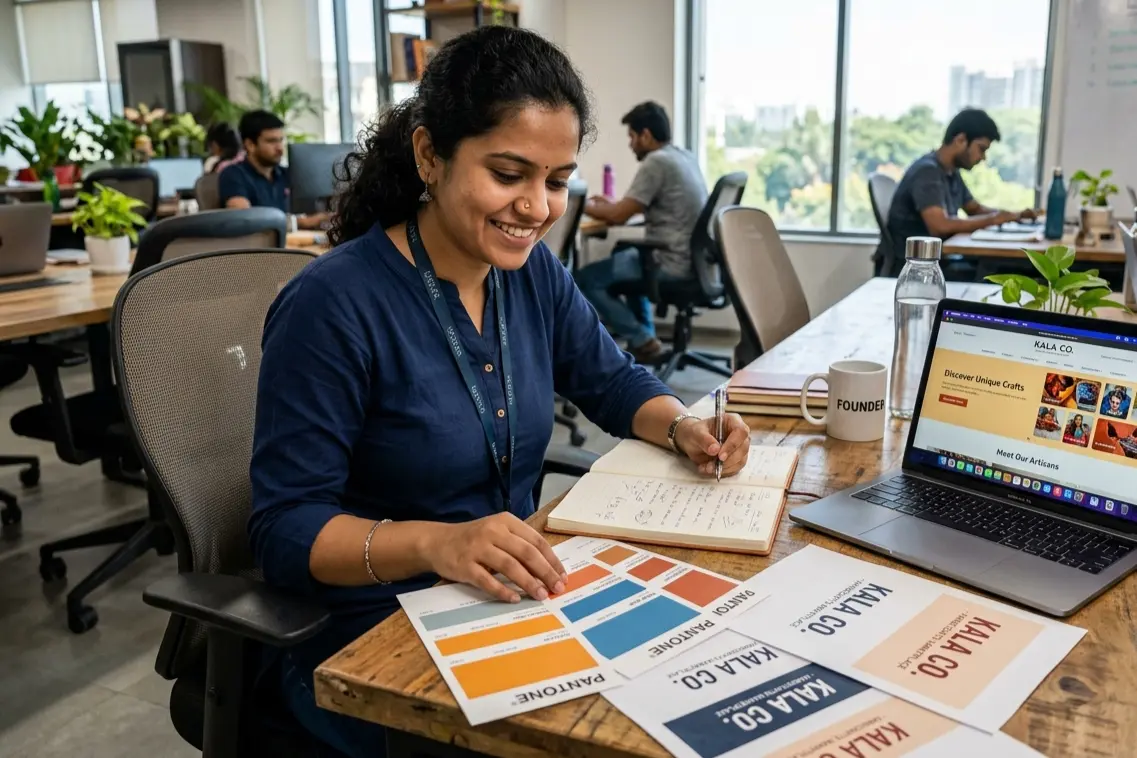
We had a conversation last year with a founder based out of Pune. She had a genuinely good product, a skincare line made from locally sourced ingredients, and she had been running Instagram ads for four months straight. The traffic was decent. The sales were not.
When we looked at her website, we saw the problem immediately. The logo was a basic text treatment. The colours shifted between pages. The homepage headline said something like “Natural Care for Your Skin.” There was nothing wrong with it exactly. But there was nothing to remember either. The brand was not doing any work.
That is the thing most startup branding tips articles do not actually say out loud. A weak brand does not just look unprofessional. It makes every rupee you spend on marketing work harder than it should.
Why Branding Breaks Down Before It Starts
Most founders do not fail at branding because they ignored it. They fail because they started with the wrong thing.
The usual sequence goes like this. Pick a logo from a freelancer for Rs. 4,000. Choose a colour because it felt right. Set up a website using a template. Start running ads. Wonder why nothing is converting.
The problem is not the logo or the colour. The problem is that none of it came from a clear answer to the actual question: who is this brand for, and why should they trust it over someone else?
According to the 2025 Edelman Trust Barometer Special Report on Brand Trust, 80 percent of people trust the brands they personally use, and trust now sits alongside quality and price as a decisive purchase consideration. That trust is not created by an ad. By the time someone clicks and lands on your site, the brand has already earned it or lost it.
This is where most startup branding tips conversations need to start, not with fonts, but with trust.
What Branding Is and What It Is Not
Here is the version nobody frames clearly. Branding is not your logo. Your logo is one piece of a much larger system.
Branding is the complete answer to this question: why should someone pick you over the three other options they already have open in other tabs?
It is your positioning, which is who exactly you are for and what specifically you do for them. It is your messaging, which is how you talk about that in a way that feels human and clear. It is your visual identity, which is how all of that shows up consistently. And it is your website experience, because that is where almost all of your brand building strategies get tested in real time.
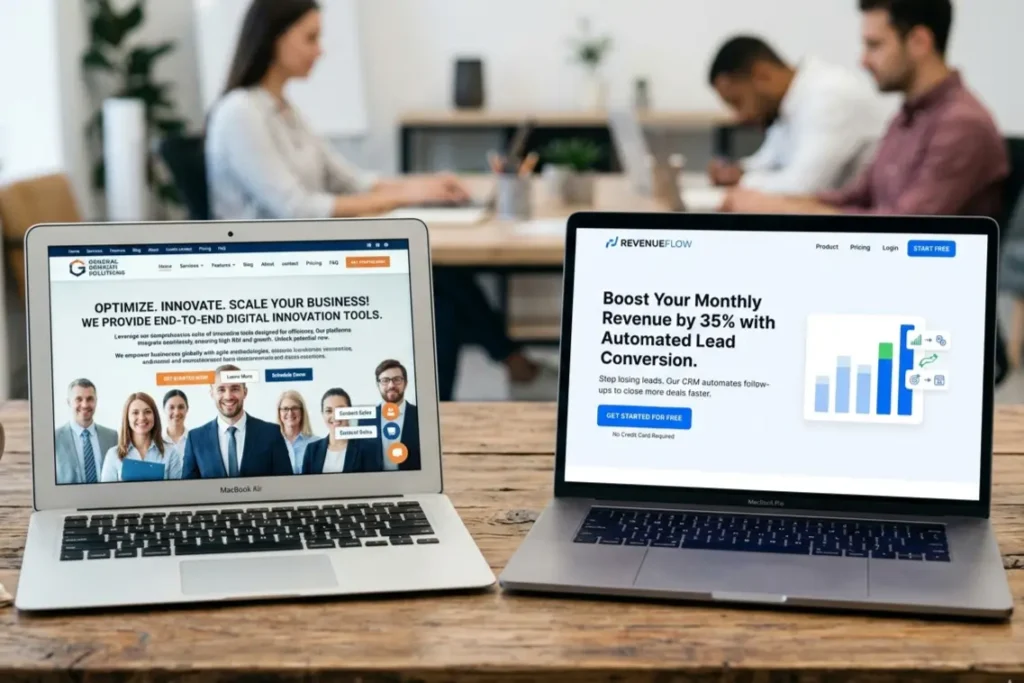
When all of these work together, the brand starts closing for you before your team says a single word. When they do not, every conversation with a potential customer starts from zero.
The India Context Nobody Writes About Honestly
Most guides on startup branding tips are written for a Western audience. They reference Stripe and Airbnb and Mailchimp. Useful reference points, but not the full story for a founder building in India.
Here is what is actually different.
Your customer is buying on their phone, often on a slow connection, often while doing three other things. They are comparing you to brands that have been running longer and have more reviews. They are trusting peer recommendations and Instagram comments over polished advertising copy. And they are making the decision to trust or not trust your brand in a few seconds, before they read a single word of your copy.
We have worked with enough founders across Bangalore, Mumbai, and Delhi to say this clearly: the brands that convert in India are the ones that feel real. Not expensive. Not over-designed. Real. Consistent. Clear about who they are.
Branding for startups India is not about looking global. It is about looking credible to the specific person you are trying to reach, in the context where they are actually going to encounter you.
According to research by Lucidpress, consistent brand building strategies across all channels can increase revenue by up to 23 percent. In a market where perceived credibility is often the only thing separating a brand that converts from one that does not, that number is worth sitting with.
How to Build a Startup Brand That Converts
If you are genuinely starting from scratch and asking how to build a startup brand from scratch, here is the order that actually works. It is not the order most people follow.
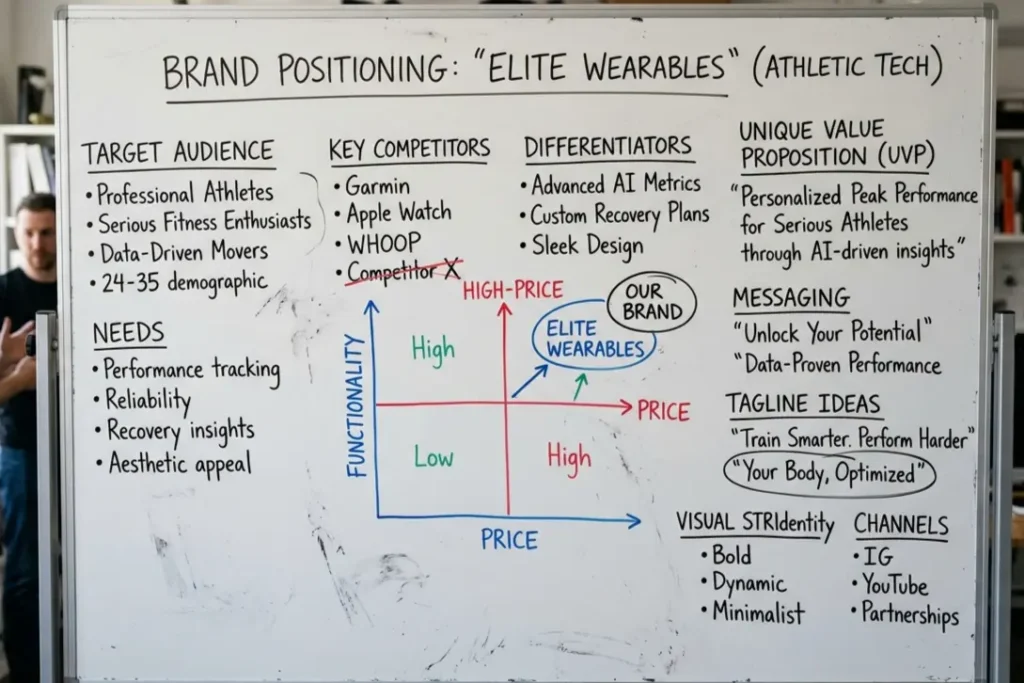
Start with positioning, not design
Three questions. Do not move on until the answers are specific enough to be useful.
Who are you actually for? Not “anyone who needs skincare” or “small business owners.” A real segment with real characteristics.
What do you do for them that someone else does not do the same way? This is not about being unique for the sake of it. It is about being clear.
What do they feel after working with you or using your product? This becomes the emotional core of everything else.
Write one sentence before you brief a designer
“We help this audience achieve this outcome without this pain.” That sentence goes in your homepage headline, your pitch deck, your email footer. Everything else supports it.
Build visuals around your audience, not your taste
A wellness brand for urban women in their 30s should feel different from a logistics software for warehouse managers. Both are valid. Both need different design decisions. Most early-stage founders choose colours and fonts they personally like, which is the wrong filter entirely.
Keep your brand guide simple enough to actually use
Logo files. Exact colour codes, not “warm red” but the actual HEX code. Two or three fonts. A one-page tone of voice reference. That is enough to start. Our guide on how to create a brand style guide goes into the specifics if you want the full picture.
Where the Budget Actually Goes Wrong
This comes up constantly at Resource Geeks Networks. A founder spent Rs. 35,000 on a logo package. Rs. 18,000 on social media templates. Now they want a website for Rs. 12,000.
The order is completely backwards, and it costs them months.
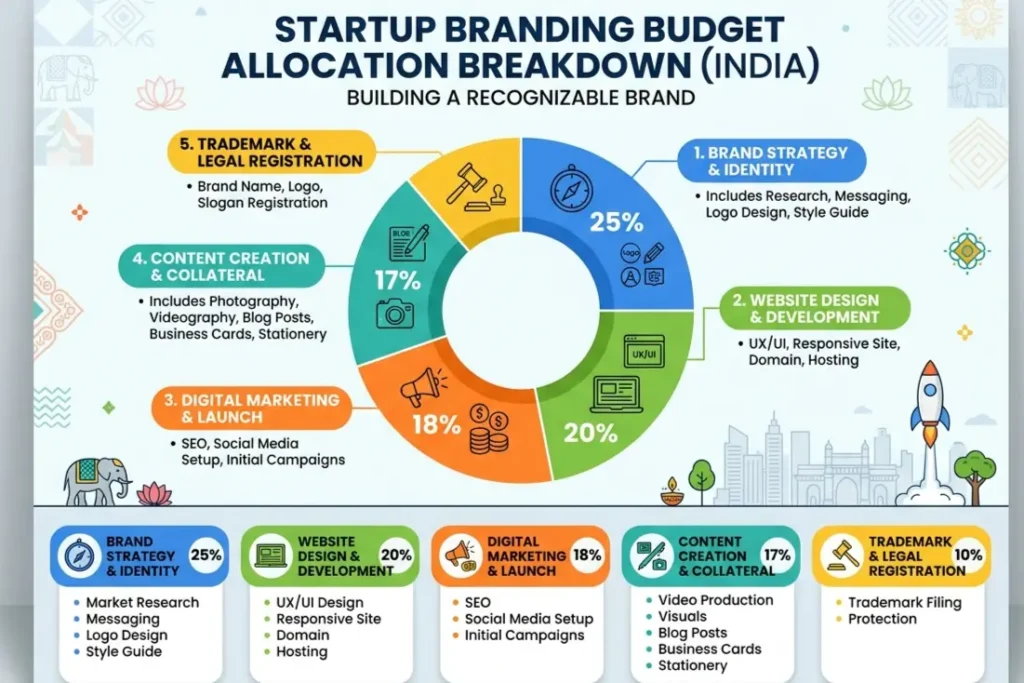
Here is the honest split for branding for startups India at an early stage, based on where the work actually matters.
Website and UX takes 40 percent of the budget. This is not because websites are glamorous. It is because your website is the only branded touchpoint where a potential customer actually makes a decision. Everything else, ads, social posts, packaging, brings them there. The website is where the conversion happens or does not.
Brand strategy and messaging takes 25 percent. This is the thinking work. Positioning, voice, and the core sentence that makes everything else coherent.
Visual identity takes 20 percent. Logo, colour system, typography. Important, but only after the strategy gives it something to express.
Marketing assets take 15 percent. Templates, decks, email design.
Your Website Is the Brand
People also ask this question a lot: does branding really affect website conversions?
Yes. And the reason is not complicated.
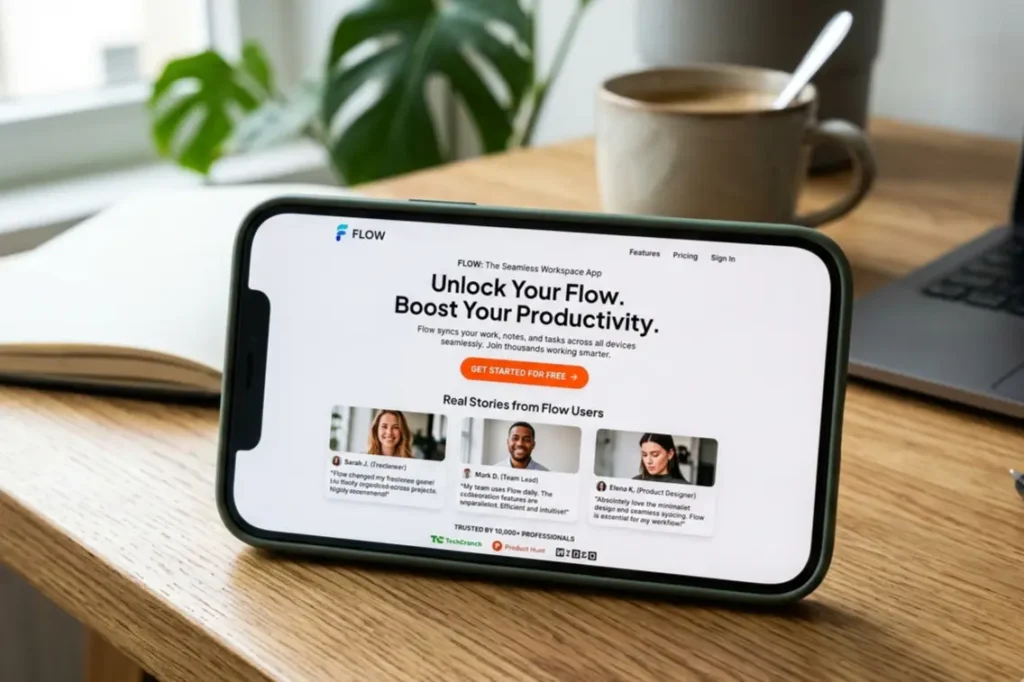
When someone lands on your site, they are asking one silent question: can I trust this? Every single element on the page answers that question one way or the other. How fast it loads. What the headline actually says. Whether the images look real or stocky. Whether there are reviews from actual people. Whether it works properly on a phone.
We have seen founders change just the homepage headline and watch their enquiry rate shift meaningfully within two weeks. No new design. No new traffic source. Just clearer messaging. That is startup branding tips doing actual work in the real world, not theory.
People also ask: how long does building a startup brand actually take? Getting the foundation in place, positioning, visuals, messaging, realistically takes two to six weeks when there is real focus on it. Building recognition after that takes consistent months. But those first few weeks determine whether everything after compounds into something or just disappears into the noise.
For how branding connects to how you actually show up and get chosen in a competitive market, the blog on branding agencies in Bangalore covers that angle in depth.
People Also Ask
What are the startup branding tips that actually work in India?
The ones that begin with positioning and messaging before any design decision is made. Know who you are for and why specifically before you brief anyone on colours or logos.
How much should I spend on branding for my startup in India?
Early stage, somewhere between Rs. 50,000 and Rs. 3,00,000 depending on scope. The priority order is website first, then messaging, then visual identity.
What is the biggest branding mistake startup founders in India make?
Treating branding as a design project. Starting with the logo means the design has no strategy underneath it, and it shows.
FAQs
Can startup branding be done on a tight budget in India?
Yes, but the order matters enormously. A clear message and a functional website will do more than an expensive logo without either.
When is the right time to invest in professional branding?
Before paid marketing starts. If the brand is not ready to convert visitors, every rupee on ads is going into a leaky bucket.
What is the actual difference between a logo and a brand?
A logo is one file. A brand is the complete system of how a business looks, sounds, and makes people feel across every single touchpoint they encounter.
Does an early-stage startup need a brand guide?
Yes. Not an elaborate one. Just clear enough that a freelancer or new team member can produce something consistent without having to guess.
How does branding connect to SEO for a startup?
Directly. A brand with clear, consistent messaging produces more focused content, earns more links, and generates more branded search over time. In 2026, building a brand and building search visibility are not separate strategies.
Ready to Build a Brand That Actually Works
Your product deserves a brand that matches its quality.
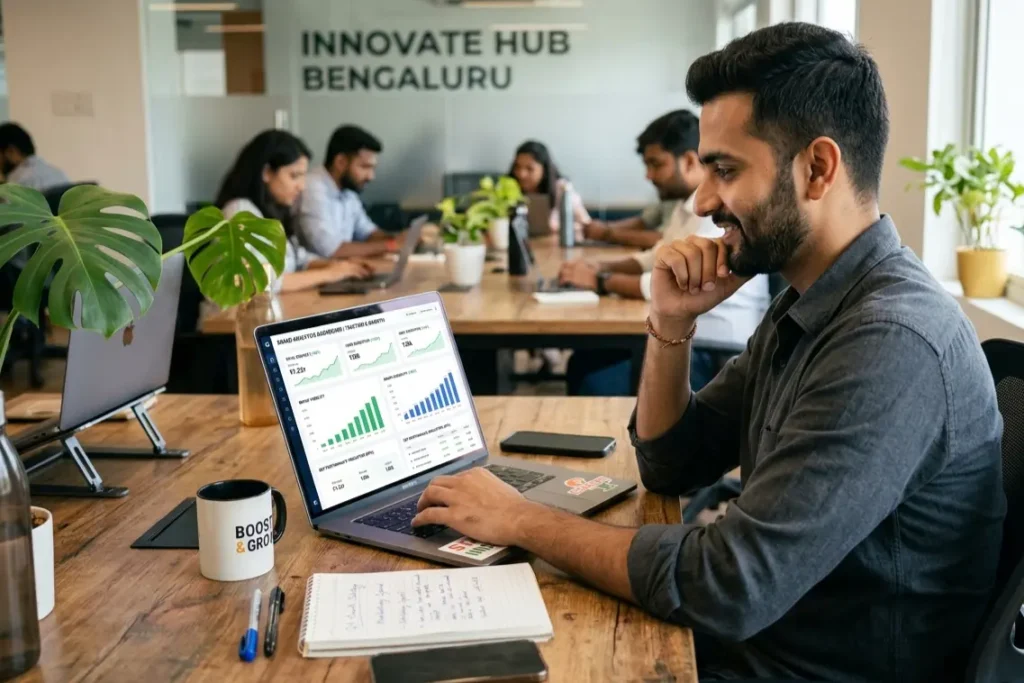
At Resource Geeks Networks, we work with startups and growing businesses across India to build brands that convert, not just impress. From positioning and messaging through to the website that carries it all.
Explore our Website Development services to see how we build conversion-ready platforms built around your brand.
Take a look at our UI/UX Design services to see how design and brand experience come together to drive real business results.
Visit resourcegeeksnetworks.com to start a conversation.
About the Author
Vijay Co-Founder, Resource Geeks Networks
Vijay is the co-founder of Resource Geeks Networks, a strategy-led design and technology studio based out of Bangalore. He works directly with startup founders and growing brands across India, helping them build websites, brand systems, and digital products that are clear, credible, and built to convert. Most of his best thinking comes from the calls nobody writes case studies about, the founder who spent four months on ads before fixing the brand, the rebrand that doubled enquiries, the homepage rewrite that changed everything. He writes because most branding content skips the honest part.