


India’s ecommerce sector is growing faster than almost any other market in the world right now. According to GlobalData’s 2026 forecast, the market is on track to cross ₹19.7 trillion this year alone, driven by UPI adoption, Tier 2 city growth, and a generation of buyers who now default to online. So when you type ecommerce website cost india into Google and get answers ranging from ₹25,000 to ₹25 lakh from five different agencies, it’s maddening, because the opportunity is real and the pricing guidance is useless.
We’ve built ecommerce stores for Indian D2C brands at Resource Geeks Networks across skincare, fashion, wellness and FMCG. We’ve seen what works, what gets rebuilt in twelve months, and what nobody puts in the quote. This is that conversation.
Why Ecommerce Pricing in India Makes No Sense
We’ll be direct. Most agency blogs are vague about pricing on purpose. If they commit to numbers, they might lose a lead before getting on a call. So “₹50,000 to ₹25 lakh” becomes the standard answer, which tells you roughly as much as saying a house costs between ₹10 lakh and ₹10 crore.
How much ecommerce website development costs actually depends on what stage your brand is at, what your store genuinely needs to do, and whether the agency quoting you is thinking about your revenue or just their timeline. We’ve watched a founder spend ₹28,000 on a store that was functionally abandoned by month eight, and we’ve seen another invest ₹2.2 lakh on a properly built WooCommerce store that now moves ₹18 lakh a month in skincare. The budget gap between those two stories was far smaller than the thinking gap.
Five Things That Actually Decide Your Bill
Platform choice is the first one. Shopify charges monthly. WooCommerce has a one-time build cost but needs real hosting and maintenance. Custom builds give you full ownership but require a larger upfront investment and more developer hours.
Design quality is the second. A template theme tweaked with your logo and a fully custom mobile-first UI built around how Indian buyers actually behave are completely different projects, with completely different conversion outcomes.
Your feature list is the third. UPI and Razorpay is standard. WhatsApp automation, regional language support, ERP sync, and subscription billing are not, and each one adds meaningful scope.
Product volume is the fourth. Fifty SKUs is a clean, manageable build. A thousand SKUs with dynamic filters, smart search, and real-time inventory logic is a different engagement entirely.
The fifth is who you hire. Freelancers can deliver if you know exactly what to specify. But conversion strategy, structured delivery, and genuine post-launch accountability are where the right agency earns the price difference.
Tier 1: Small Business Stores (Up to 100 SKUs)
Cost Range: ₹40,000 to ₹1,20,000
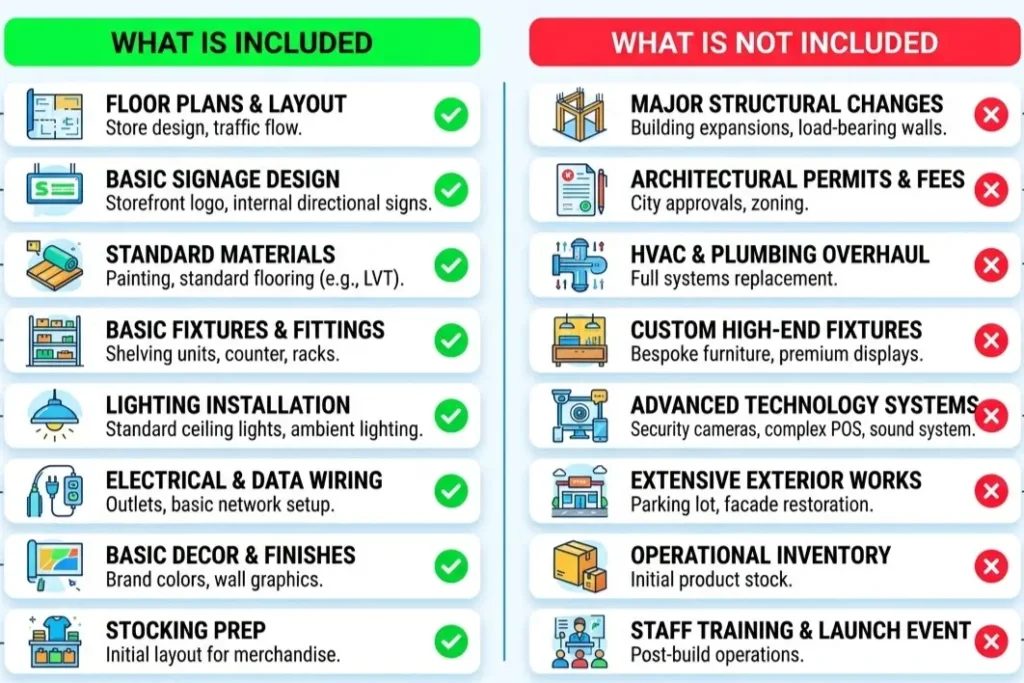
This is the right entry point if you’re moving from Instagram DMs or a WhatsApp catalogue to your first proper store. A good Tier 1 build gets you Shopify or WooCommerce setup, theme customisation with your branding, Razorpay and UPI integration, up to 100 products with basic search, and a fully mobile-responsive layout.
What it doesn’t include is conversion architecture, automation, or anything built specifically around reducing doubt in a first-time buyer. That matters more than most founders realise when they’re getting quotes.
The reality: most ₹25,000 to ₹30,000 “packages” fail within six to twelve months. They’re built for launch day, not for the actual work of convincing a sceptical buyer in Lucknow to hand over ₹900 for a face wash from a brand they’ve never heard of.
Tier 2: Mid-Scale D2C Stores (100 to 1,000 SKUs)
Cost Range: ₹1,20,000 to ₹4,00,000
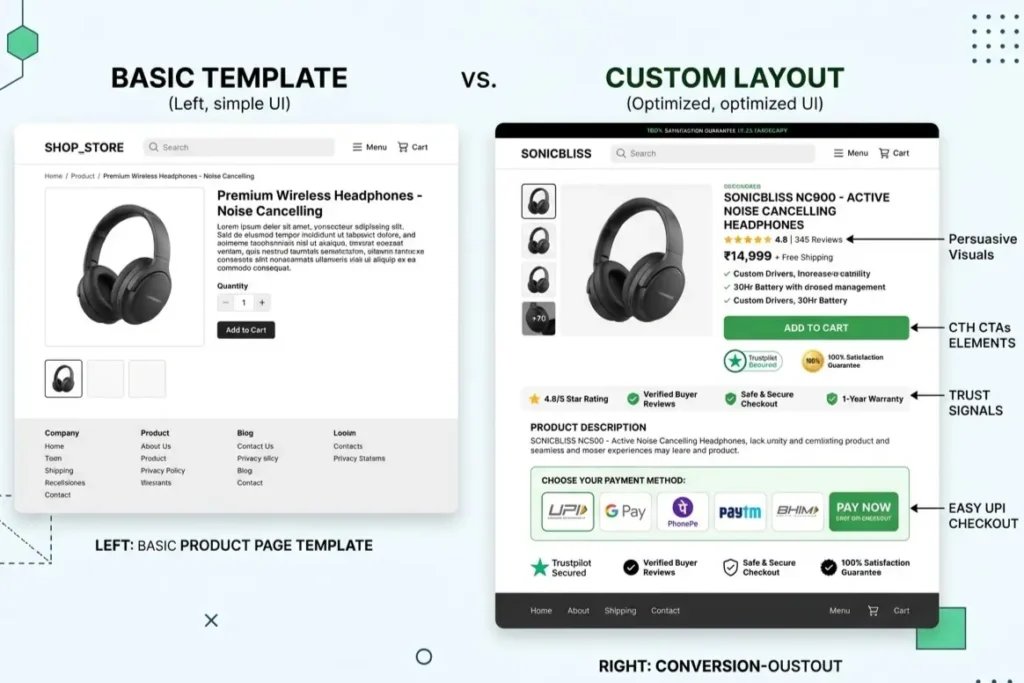
This is where most serious Indian D2C brands land and where the real revenue conversation begins. A properly built Tier 2 store includes custom UI/UX designed around Indian buyer psychology, conversion-focused product pages with trust badges and urgency signals that don’t feel fake, optimised checkout with UPI at the top of the payment stack rather than buried at step three, Core Web Vitals performance built in from the start, and app integrations for reviews, email or SMS flows, and cart recovery.
We worked with a wellness brand in Pune, around 350 SKUs, moving from a basic Shopify template to a properly built custom store. Their conversion rate moved from 1.4% to 3.6% in the first 90 days post-launch. The store cost ₹1.8 lakh to build. The monthly revenue impact at their existing traffic made payback happen in under two months.
That’s what this tier is capable of when it’s built with intent. Read more about how we approach D2C website features before scoping your store.
Tier 3: Enterprise and Custom Builds
Cost Range: ₹4,00,000 to ₹15,00,000 and above
This tier is for large catalogs, marketplace models, or high-traffic brands that need full architectural ownership. Custom frontend and backend, ERP and CRM integration, advanced analytics, personalisation logic, multi-vendor or subscription capabilities. Big investment, full control, no platform ceiling.
Honestly? Most founders who ask us about custom builds actually need a Tier 2 store. Custom is only the right answer when your revenue, complexity, and integration requirements genuinely justify it. We’ll always tell you which it is.
Shopify vs WooCommerce vs Custom: What It Really Costs
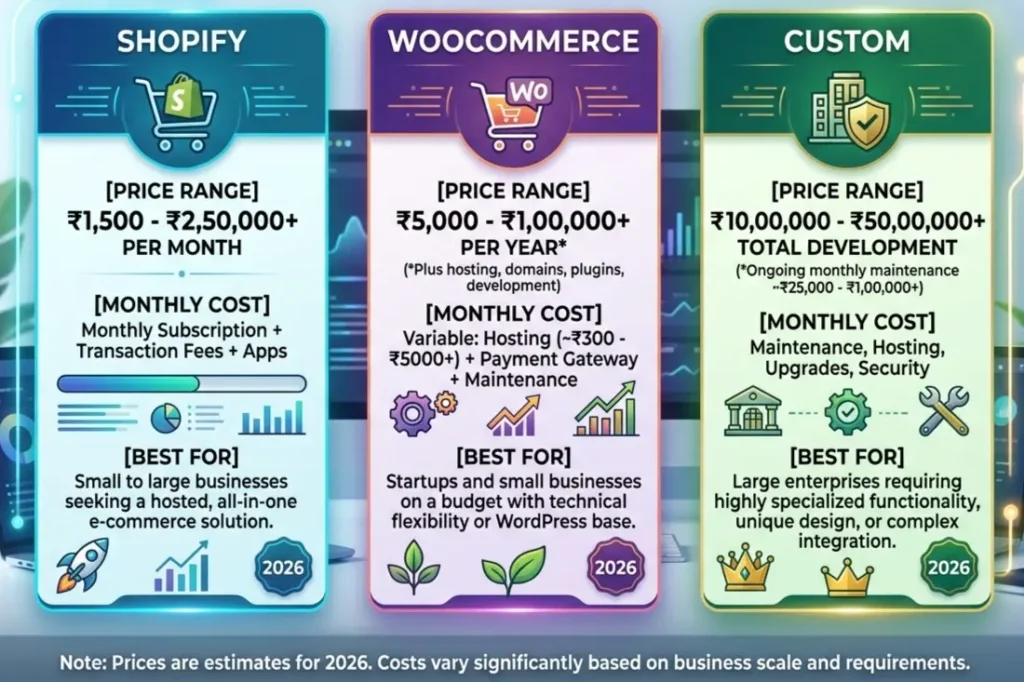
Shopify website development cost india 2026 runs ₹50,000 to ₹3,00,000 for setup and customisation, then ₹2,000 to ₹10,000 per month in platform fees ongoing. Right for founders who want fast launch and no server management.
WooCommerce development cost india sits at ₹40,000 to ₹2,50,000 as a one-time build, then ₹2,000 to ₹15,000 monthly for hosting and maintenance. Full data ownership, no transaction percentage to a platform, unlimited customisation ceiling.
Custom starts at ₹4,00,000 with ₹10,000 per month or more ongoing. Enterprise scale only.
The mistake we see most: choosing Shopify because someone in a D2C WhatsApp group recommended it, then rebuilding on WooCommerce eighteen months later when the monthly fees become painful. Platform choice should always follow your actual business model. We’ve laid out exactly how both perform at different growth stages in our Shopify vs WooCommerce guide.
The Hidden Costs Nobody Mentions in the Quote
This is the section every agency skips. It’s also where most ecommerce budgets quietly fall apart.
Payment gateway fees are 2% to 3% per transaction with Razorpay, plus GST. At ₹30 lakh monthly GMV, that’s ₹60,000 to ₹90,000 per month in gateway costs alone.
Plugin and app subscriptions run ₹500 to ₹5,000 per app per month. A functional store typically needs six to ten of them.
WooCommerce hosting that doesn’t embarrass you on load speed costs ₹3,000 to ₹15,000 per month.
Maintenance and security patches cost ₹5,000 to ₹25,000 per month depending on platform and traffic. Most cheap builds skip this entirely. The damage becomes visible around the twelve to eighteen month mark, usually right before a big campaign.
Marketing and analytics tools are entirely separate from development.
A store that costs ₹35,000 to build will almost always cost ₹2 lakh across its first two years once you add these layers. Our website maintenance guide covers exactly what gets neglected and why it matters.
What ₹1,00,000 vs ₹5,00,000 Actually Gets You
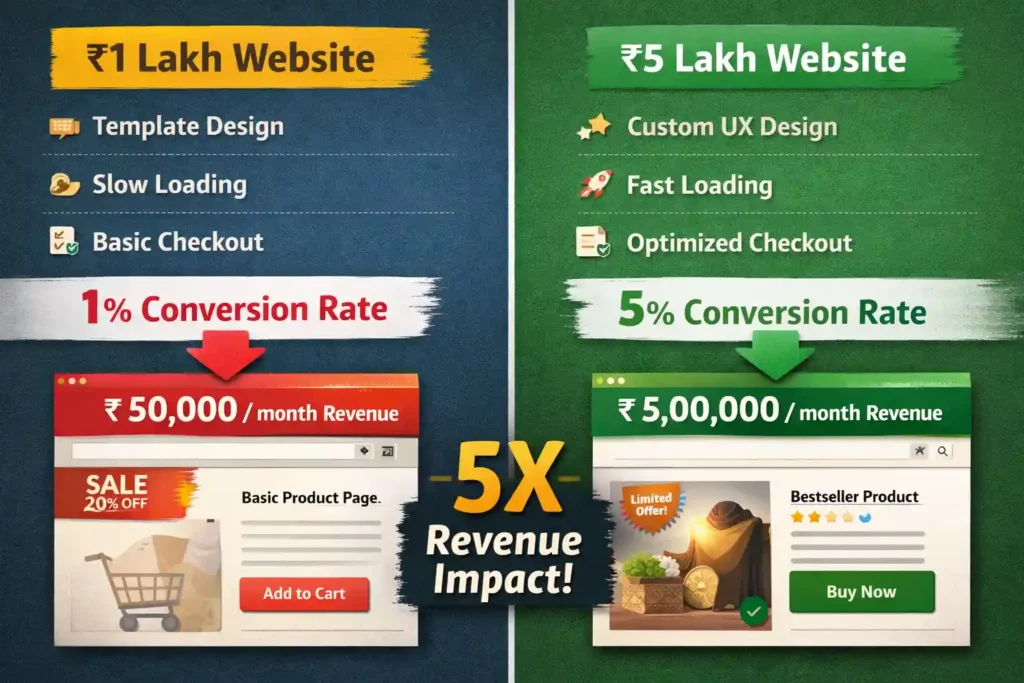
At ₹1,00,000: template-based design, average load speed, basic payment and shipping setup, limited scalability, conversion rate typically 1% to 2%.
At ₹5,00,000: fully custom UX, Core Web Vitals-optimised performance, conversion rate that can realistically reach 4% or above, enterprise-ready infrastructure, ERP and CRM integrations where needed.
The difference isn’t visual polish. It’s monthly revenue on the same traffic. Our UI UX design service is built entirely around closing that conversion gap.
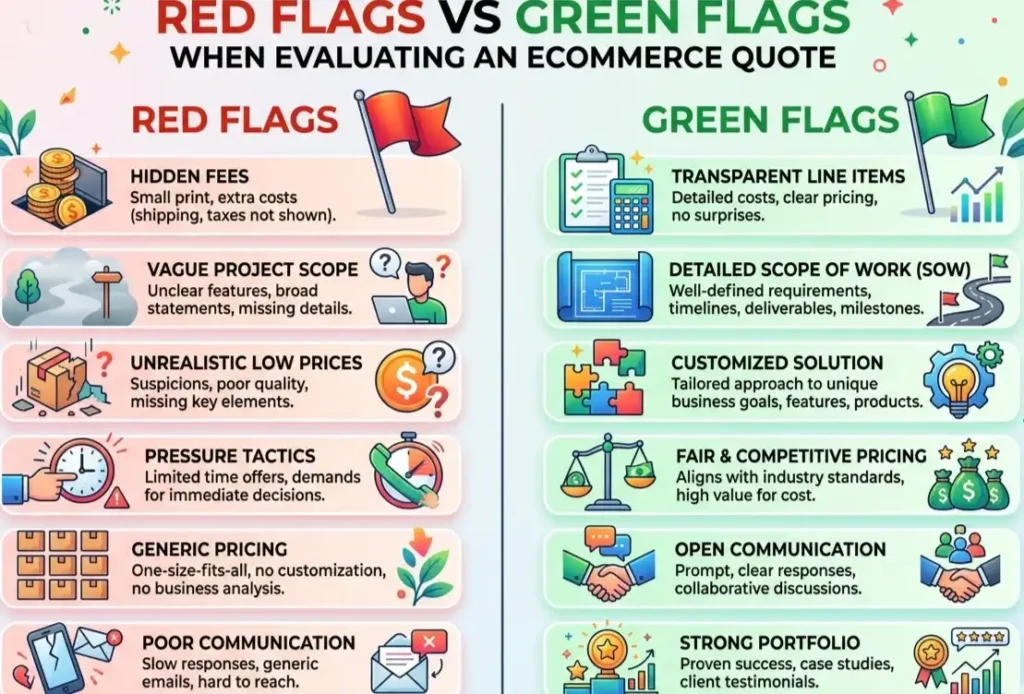
Red Flags in a Quote You Should Never Ignore
Run if you see “unlimited features” with no defined scope. Run if maintenance isn’t mentioned anywhere in the proposal. Run if the conversation goes straight to design without a single word about conversion. Run if the quote is under ₹30,000 and there’s no Indian D2C portfolio behind it.
A good agency talks ROI before aesthetics. They have real case studies and post-launch support built into the proposal from day one. That’s true whether you’re spending ₹80,000 or ₹4 lakh.
FAQs
What will the average ecommerce website cost india in 2026?
Most D2C brands spend ₹50,000 to ₹5,00,000 depending on platform, scale, and features. Starter stores sit at ₹40,000 to ₹1,20,000. Growth-stage builds with custom UX typically fall between ₹1,20,000 and ₹4,00,000.
What does shopify website development cost india 2026?
Setup and customisation runs ₹50,000 to ₹3,00,000, plus monthly subscription fees of ₹2,000 to ₹10,000 depending on your Shopify plan tier.
What is woocommerce development cost india?
A properly built WooCommerce store costs ₹40,000 to ₹2,50,000 as a one-time investment, plus ₹2,000 to ₹15,000 monthly for hosting and maintenance.
One More Thing Before You Get Quotes
Most ecommerce stores don’t fail because of a bad product or a weak brand. They fail because nobody building them was thinking seriously about the person on the other side of the screen, what they need to trust a brand they’ve never heard of, and whether the checkout was designed for how Indians actually pay.
At Resource Geeks Networks, we start every ecommerce project with those questions before we open a design tool. Transparent, scoped pricing. No hidden fees. Post-launch support that doesn’t disappear after handover.
See our full pricing tiers at resourcegeeksnetworks.com/pricing
Start a conversation at resourcegeeksnetworks.com/contact
Written by the Resource Geeks Networks Design and Development Team, Bangalore. Shopify Partner. Webflow Expert. Google Partner. We’ve built ecommerce stores for Indian D2C brands since 2022 across skincare, fashion, wellness, and FMCG.