
India’s D2C space is one of the fastest-moving in the world. According to a McKinsey report released in February 2026, India’s D2C channel is expected to grow nearly three times faster than traditional online marketplaces, reaching up to USD 60 billion by 2030. And yet, most stores that launch into this opportunity don’t convert. Not because the products are wrong. Because the store wasn’t built right.
D2C website features are the difference between a store that sells and one that simply exists. This isn’t a guide on how to build. It’s a pre-launch audit – the honest answer to the question most founders never ask before going live: “have we actually built it right?”
Why Most D2C Stores Fail (It’s Not the Products)
We’ve seen this story more than once. A founder in Pune. Strong product. Real Instagram engagement. They launch on a well-known platform, run ads, get traffic. Sixty days in, the sales numbers don’t make sense. The traffic is real. The demand signals are there.
What they didn’t audit before launch: three of the twelve features on this list were missing. The page loaded in six seconds on a mid-range Android. UPI was buried below four other payment options. Reviews were nowhere above the fold. And the return policy was a paragraph of legal language hidden in the footer.
That’s not a product problem. That’s a direct to consumer website india problem. The audience showing up, largely first-time buyers from Tier 2 cities on mobile data, needed specific things to trust the purchase. Those things weren’t there.
India still lags in ecommerce conversion rates compared to the US and Europe, with trust barriers, COD preferences, and infrastructural challenges being the primary drag factors. Which means the twelve features below aren’t nice-to-haves. They’re the architecture of trust your store needs before a single rupee goes into ads.
The 12 Must-Have Features: Full Checklist
1. Mobile-First Design
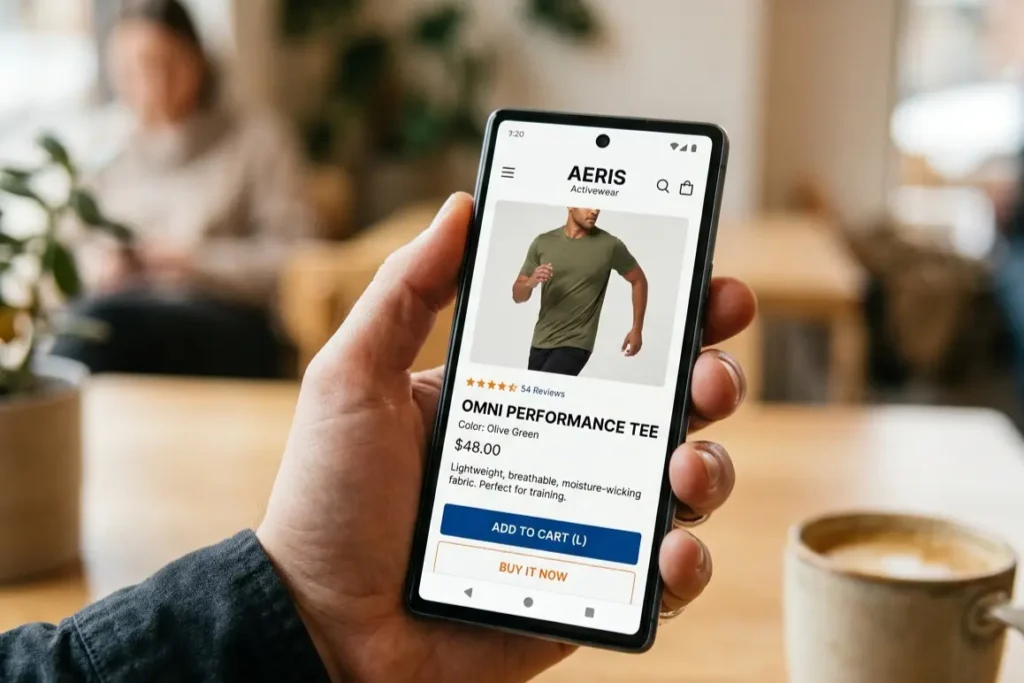
This isn’t “mobile-friendly.” It’s mobile-first. There’s a real difference. Mobile-friendly means a desktop site that doesn’t break on a phone. Mobile-first means every design decision, from button size to image weight to CTA placement, starts with the phone screen.
As of Q3 2025, smartphones accounted for roughly 78% of retail site visits worldwide and generated about 70% of all online shopping orders. In India, that number skews even higher because most new online shoppers enter through a budget Android, not a laptop.
If your d2c website features list doesn’t start here, nothing else on this list matters as much. A broken mobile experience is a broken store.
What should a D2C ecommerce website include for mobile users? Thumb-friendly tap targets, compressed images, single-column product layouts, and a checkout that works without zooming in.
Every design decision for your D2C website development starts with the phone screen, not the desktop.
2. Fast Load Speed (Under 3 Seconds)
53% of mobile users leave a site if it takes more than three seconds to load. That’s not a trend. That’s a default customer behavior. Every second of load time is a portion of your ad spent walking out the door.
Before launch, run your store through Google PageSpeed Insights. If you’re above three seconds on mobile, you don’t have a marketing problem yet. You have a technical one. Compressed images, lazy loading, and a lightweight theme fix the majority of speed issues before they cost you.
3. Trust Signals Above the Fold
“Above the fold” means visible before the user scrolls. If your trust signals (reviews, ratings, certifications, delivery guarantees) are below the scroll line, most first-time visitors won’t see them. And the first-time visitor is the one who needs convincing the most.
A brand logo they don’t recognise, a product they’ve never tried. What makes them stay? Proof. Social proof, delivery proof, return proof. All of it needs to be visible immediately, on the homepage, on the product page, before checkout.
How do I make my D2C website trustworthy in India? Put reviews and star ratings above the scroll line, show delivery timelines on the product page (not the footer), and write your return policy in plain language.
This is exactly what we mean when we say UI UX design for your D2C store is a build decision, not a design preference.
4. Indian Payment Gateway Integration
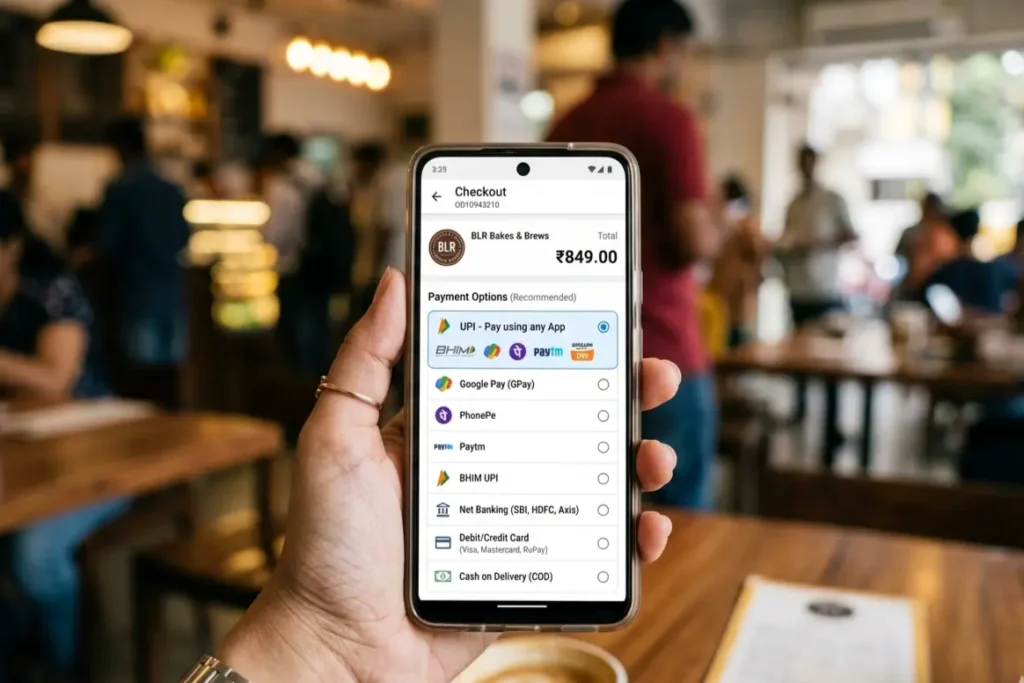
UPI first. Not second, not third. First.
India processed over 20 billion UPI transactions in a single month. Putting UPI below card or net banking options in your checkout isn’t a neutral design choice. It’s a conversion decision that quietly costs you every day.
A proper direct to consumer website india build integrates Razorpay or PayU with UPI, cards, net banking, and wallets in the correct priority order for Indian buyer behavior. Getting this wrong at launch is one of the most common and most fixable mistakes we see.
5. BNPL Options
Buy Now Pay Later is no longer a premium feature. For categories where average order value crosses ₹800 to ₹1,000, BNPL (Simpl, LazyPay, or Razorpay’s instalment option) meaningfully reduces checkout hesitation.
A first-time buyer considering a ₹1,200 skincare set is doing math in their head. BNPL removes that moment of friction. And that moment is where a lot of otherwise-interested customers leave.
6. Product Search with Filters
If your store has more than 30 products, broken or slow search is a silent revenue leak. Visitors who use internal search convert at significantly higher rates than those who browse. A search bar that returns poor results, or no filters to narrow by size, shade, or category, turns a high-intent visitor into a frustrated one.
This is part of what we mean when we talk about product page design tips as a core build decision rather than a design preference.
7. Cart Abandonment Recovery
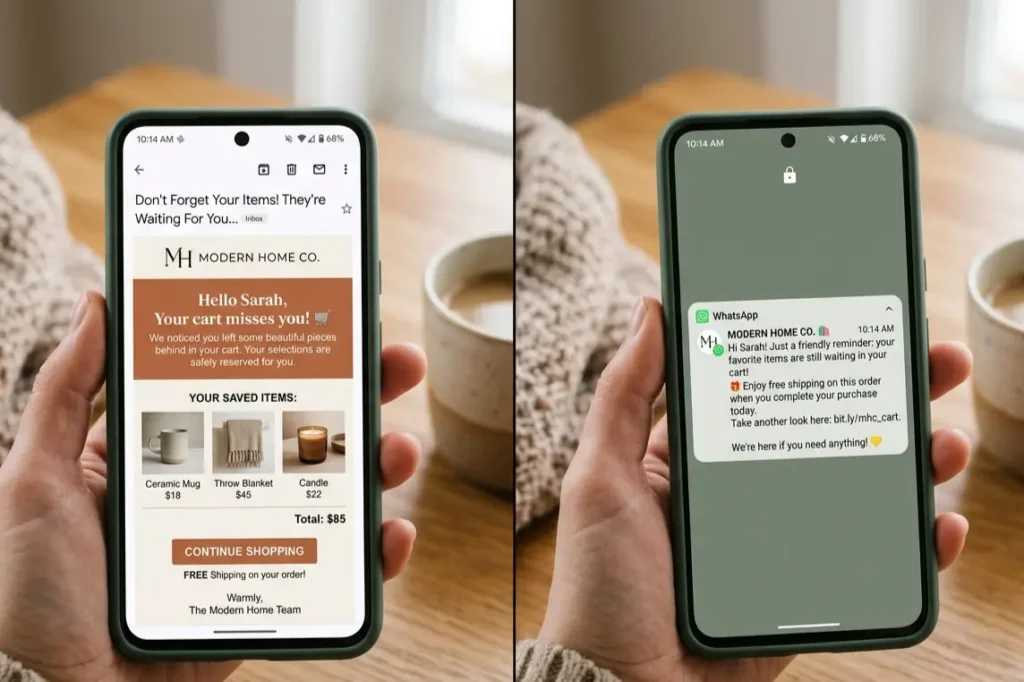
Cart abandonment in Indian D2C sits above the global average because trust barriers are higher and buyers are more comparison-prone. A cart recovery flow (email sequence plus WhatsApp nudge) is not a marketing add-on. It’s a standard feature of a store that’s been built to recover revenue that’s already earned. If you want to go deeper on what moves the needle after launch, our guide to ecommerce conversion rate optimisation covers the post-launch levers in detail.
Launch without this and you’ll spend the first three months watching analytics and wondering why 70% of carts disappear.
8. WhatsApp Chat Integration
Indian buyers trust WhatsApp. It’s where they talk to family. Brands that put a WhatsApp chat button on their store benefit from a trust association that no other chat widget offers in this market.
Keep it simple. A button that opens a pre-filled WhatsApp message asking about the order or product is enough. The point is availability. Knowing someone is reachable converts hesitant buyers.
Should my D2C website in India have WhatsApp integration? Yes, especially for first-time buyers and categories with higher perceived risk (skincare, supplements, electronics accessories).
9. SEO-Ready URL Structure and Schema
This one gets skipped because it’s invisible to the customer. It shouldn’t be invisible to you.
URL structure, product schema, breadcrumb schema, and review schema are decided at the build stage. Getting them wrong means every SEO investment after launch is fighting the foundation instead of compounding on it. A URL like /products/moisturiser-dry-skin-100ml/ outperforms /products/prod-1234/ not just for SEO but for the AI Overviews and ChatGPT answers that your customers are increasingly getting their discovery from.
For a full breakdown of how this connects to your store’s long-term ecommerce website development india strategy, we’ve covered it in detail elsewhere.
10. Size Guide and Product Detail Depth
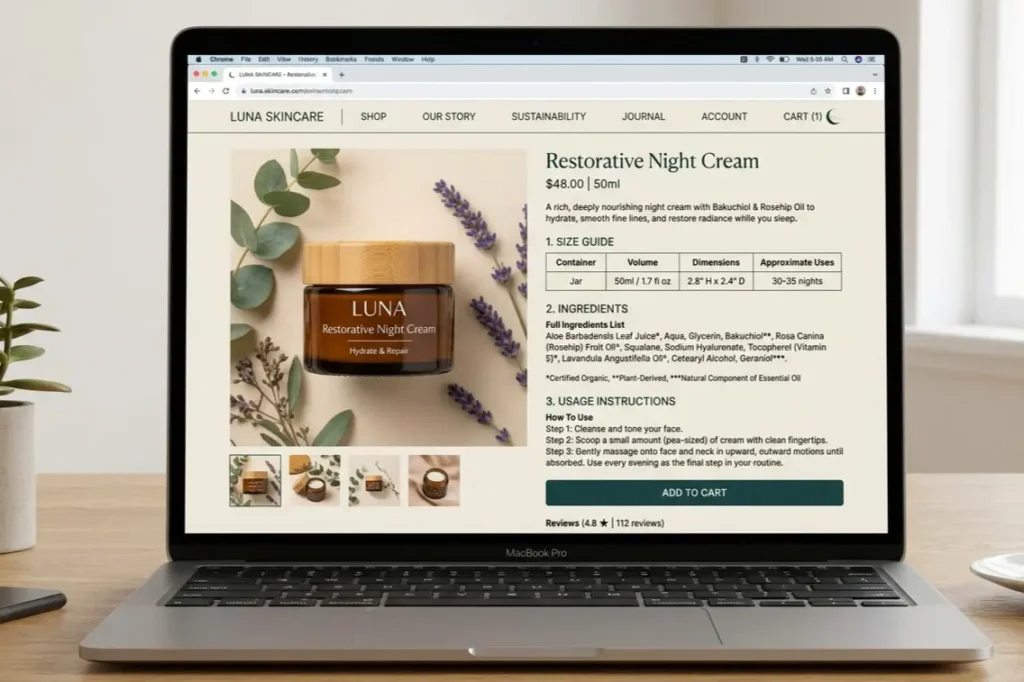
This is one of the most overlooked features on the d2c brand website checklist india. Ambiguous sizing causes returns. Returns cause working-capital stress. COD return rates of 25 to 30 percent are driving real working-capital pressure for Indian D2C brands. Returns from sizing confusion are the avoidable portion of that number.
A size guide embedded on the product page (not linked to a separate page) reduces sizing-related returns and increases first-order confidence. If you sell anything with variation, make it impossible to misunderstand.
11. Returns and Shipping Policy Visibility
If a first-time Indian buyer has to look for your return policy, you’ve already lost a percentage of them. It should be visible on the product page. Not linked. Visible. Three sentences: what you accept, how long it takes, what condition the product needs to be in.
Same with shipping timelines. “Ships in 3 to 5 business days” on the product page is a trust signal. “See shipping policy” as a footer link is an obstacle.
12. Instagram / UGC Feed Integration
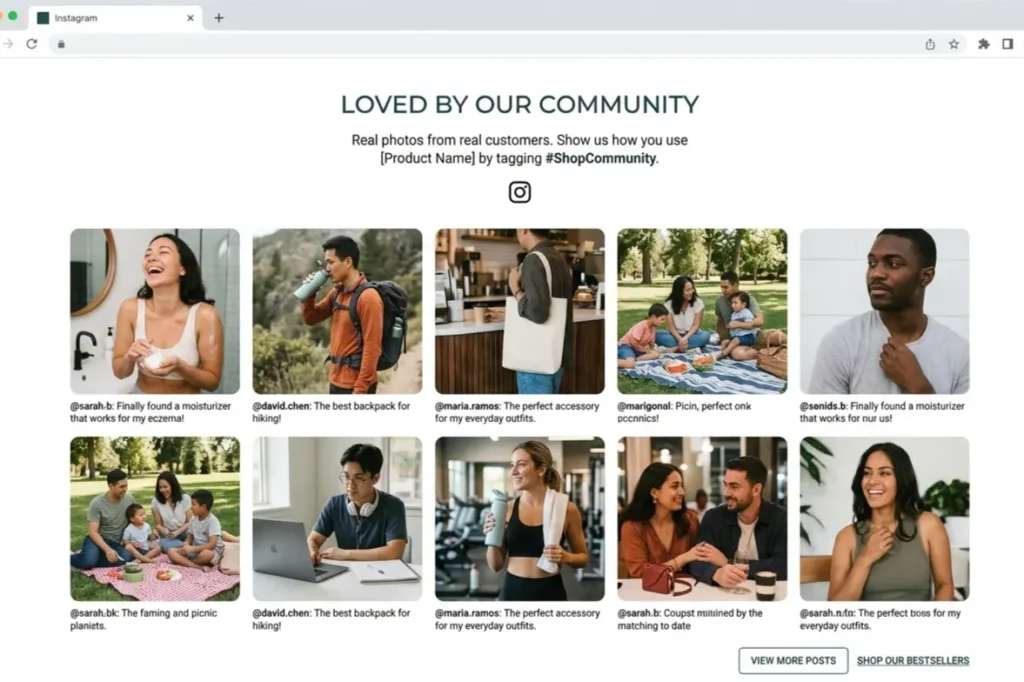
A live Instagram feed or user-generated content section is not about aesthetics. It’s about proof of community. A buyer who sees twenty other people using the product before they buy is a buyer who needs one fewer reason to hesitate.
For Indian D2C brands specifically, UGC from real customers, especially non-influencer everyday buyers, converts better than polished brand photography. The imperfection is the trust signal.
FAQs
What are the must have features for a D2C ecommerce website India?
Mobile-first design, UPI payment integration, trust signals above the fold, cart abandonment recovery, and an SEO-ready URL structure are non-negotiable. Returns policy visibility and WhatsApp chat integration are the most commonly skipped features that directly affect conversion.
What should a D2C brand website include before launch?
A pre-launch audit should verify all twelve features on this list are live and functional: mobile-first design, load speed under three seconds, trust signals, Indian payment gateway with UPI first, BNPL, product search with filters, cart recovery, WhatsApp chat, schema markup, size guides, visible returns policy, and UGC or Instagram integration.
How do I know if my direct to consumer website india is ready to launch?
Run it through PageSpeed Insights (mobile score above 80), test checkout on a mid-range Android, check that UPI appears as the first payment option, verify reviews are visible before the fold on the product page, and confirm cart recovery is active. If any of these fail, you’re not ready.
What d2c website features help with conversions in India?
Trust signals, UPI-first checkout, visible shipping timelines on the product page, and cart abandonment recovery have the highest per-feature impact on Indian D2C conversion rates. BNPL matters significantly for AOVs above ₹800.
How do I reduce cart abandonment on my D2C website?
A three-part approach works: reduce checkout steps (three or fewer), activate WhatsApp and email recovery sequences, and make your return policy visible on the product page before checkout begins. Each element independently reduces drop-off.
Why is schema markup important for a D2C website India?
Schema markup is how Google, ChatGPT, and AI-powered search surfaces your product information in rich results and AI overviews. Without it, your store is invisible to the growing segment of Indian buyers who discover products through voice search and AI-generated answers rather than traditional blue links.
What is UGC and why does it matter for D2C stores in India?
UGC stands for user-generated content, typically photos and reviews from real customers. For Indian buyers, especially first-time purchasers of D2C brands, authentic proof from people who look and live like them is more persuasive than brand photography. Integrating a live UGC feed on the homepage is one of the highest-ROI trust features you can add at launch.
The Features Most Indian Brands Skip (And Regret)
From what we’ve seen across stores we’ve built and audited at Resource Geeks Networks, the four most consistently skipped features on this list are: trust signals above the fold, SEO-ready schema at build time, the size guide, and cart abandonment recovery.
Each of them has a cost. The first costs you first-time buyer conversion. The second costs you organic compounding. The third inflates returns. The fourth leaves recovered revenue on the table permanently.
The question isn’t whether you’ll eventually add these. Most brands do, usually after they’ve run ads and wondered why the numbers aren’t moving. The question is whether you add them before launch, when it costs less and loses you nothing, or after, when it costs you both money and time.
If you want to audit your store against this full checklist before going live, or if you’re rebuilding a store that’s underperforming, our ecommerce website development india team at Resource Geeks Networks starts every project with this exact review.
Your store is either ready to convert or it isn’t. Find out before the ads run.
Talk to the team at resourcegeeksnetworks.com
Author Bio
Written by the Resource Geeks Networks Design and Development Team, Bangalore. We build high-converting D2C stores for Indian founders and global brands. Shopify Partner. Webflow Expert. Google Partner. We’ve shipped 300+ websites across ecommerce, software, and brand design for businesses across India, the UK, and international markets.