
The branding and website space in India is loud right now. Every startup, every D2C founder, every growing business is trying to get found online. And somewhere in that race, most of them miss the one thing that actually determines whether visitors buy or bounce. It is not the ads. It is not even the product. It is the brand identity design elements that either build trust on arrival or silently destroy it.
We’ll get straight to the point. If your website is getting traffic but not converting, your brand identity design elements may be the problem nobody has told you about yet.
What Brand Identity Actually Is
We had a client come to us last year. He had spent close to Rs. 75,000 on Facebook and Instagram ads over three months. Decent traffic. Almost no conversions. When we looked at the website, the logo was a free wordmark he had downloaded somewhere, the colour palette was inconsistent across three pages, and the product photos were shot on a phone against a white bedsheet. The product itself was genuinely good. But the brand was silently telling every visitor not to trust it.
That gap between a good product and a trustworthy brand is exactly what brand identity design elements are supposed to close.
Brand identity is not just a logo. It is the complete system of visual and verbal decisions that communicates who you are before a single word of copy gets read. It is how your business shows up on your website, your packaging, your Instagram grid, your invoices, your delivery box. Every touchpoint. Consistently.
According to inBeat Agency’s DTC Brand Statistics and Trends report, roughly 90% of D2C startups close by their fifth year. About 30% fail within the first year alone. A significant part of that pattern comes down to founders investing in traffic before they invest in trust. With India’s D2C market projected to cross $100 billion by the end of 2025, the competition for that trust is only getting sharper.
The Core Brand Identity Design Elements
Most articles on this topic give you a list and call it done. We want to explain why each element actually matters to a buyer who has never heard of your brand before.
Logo
Your logo is the first handshake. It needs to work at 16 pixels on a browser tab and at full scale on a packaging label. If it breaks at small sizes, it is not ready. For Indian startups selling on Nykaa, Flipkart, or their own website, a clean and scalable logo builds the kind of brand recall that drives repeat purchases over time.
Colour Palette
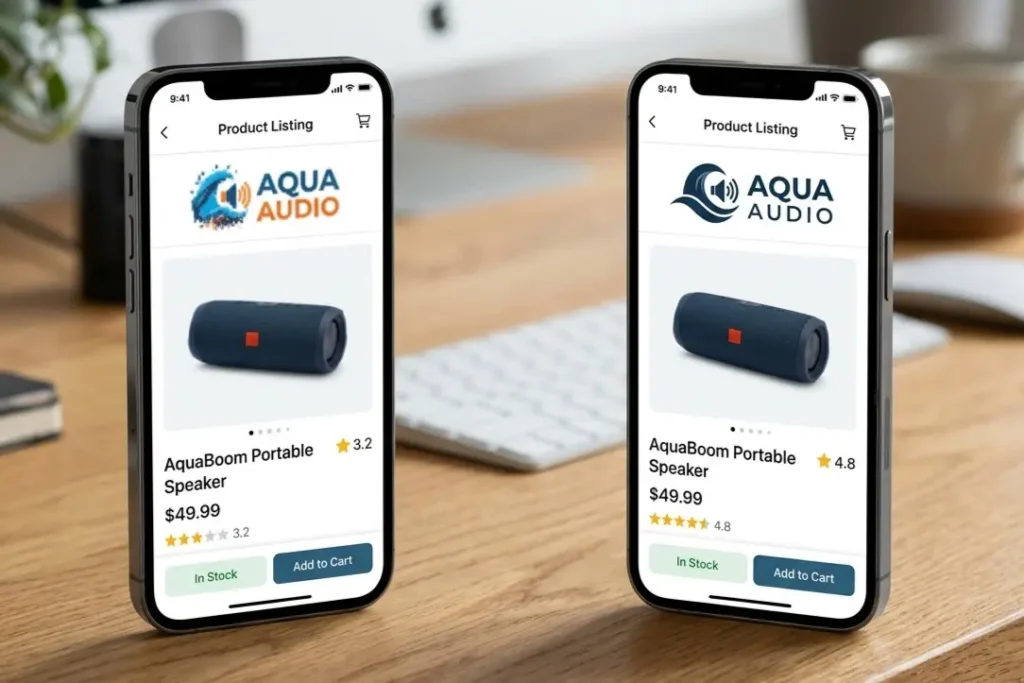
Colours are psychological triggers, not decoration. Navy communicates trust. Terracotta communicates warmth. Mint green communicates health and care. When founders pick colours based on personal taste rather than buyer psychology, they are essentially guessing at conversions.
Inconsistent colour use across your website, packaging, and social media is one of the most common visual identity design problems we audit at Resource Geeks Networks. It makes a brand look unfinished. And unfinished brands lose sales to competitors who just look more put together, regardless of whether the product is actually better.
Typography
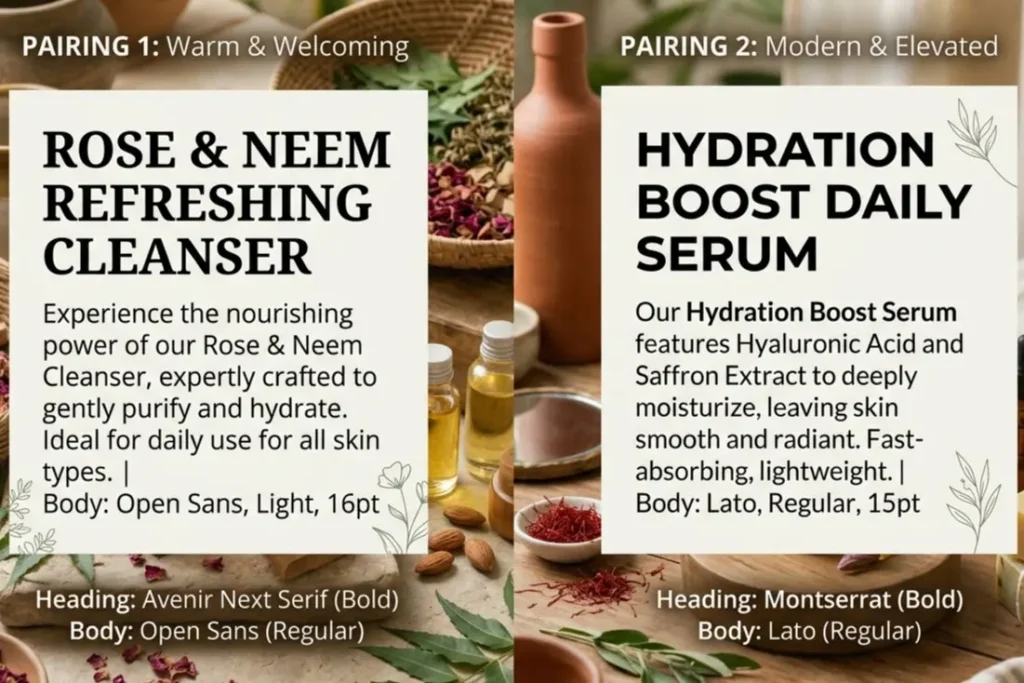
Fonts communicate personality before words do. A wellness brand using a heavy geometric sans serif feels wrong to buyers even if they cannot explain why. Typography is a brand identity component that most Indian founders either skip or outsource carelessly. It is one of the cheapest things to get right and one of the highest return fixes we see.
Photography and Imagery Style
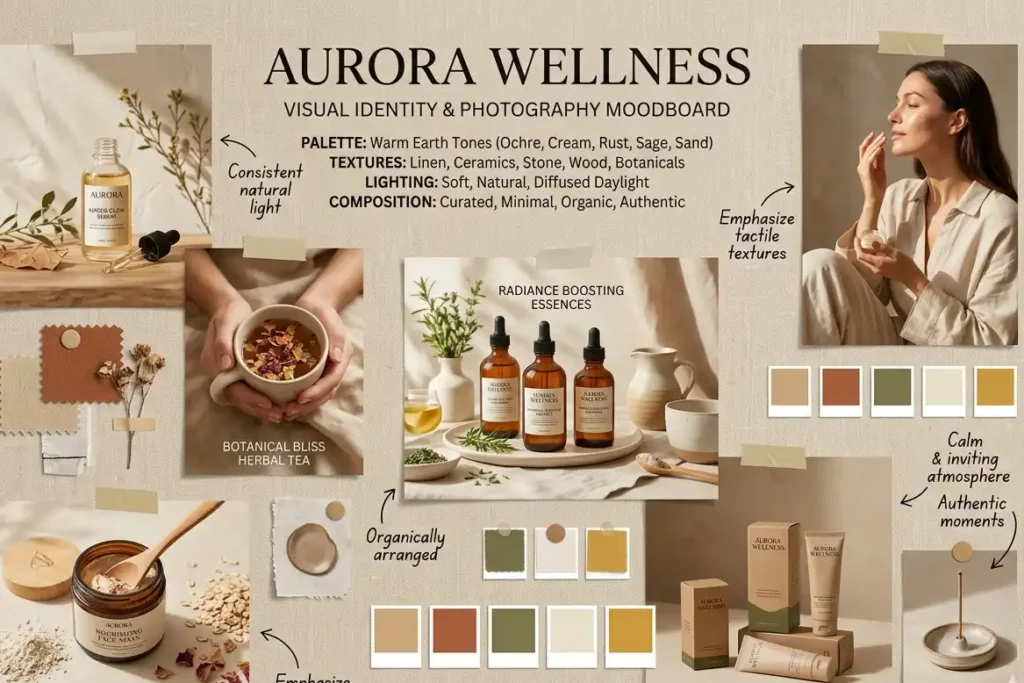
Your product and lifestyle photos must feel cohesive. Not just individually good. Cohesive as a set. A warm earthy grade on one photo and a cold bright filter on the next creates visual noise that buyers register even when they cannot articulate it. Across client work, we have consistently seen that D2C brands with a consistent imagery style convert return visitors at a noticeably higher rate.
Brand Guidelines Document
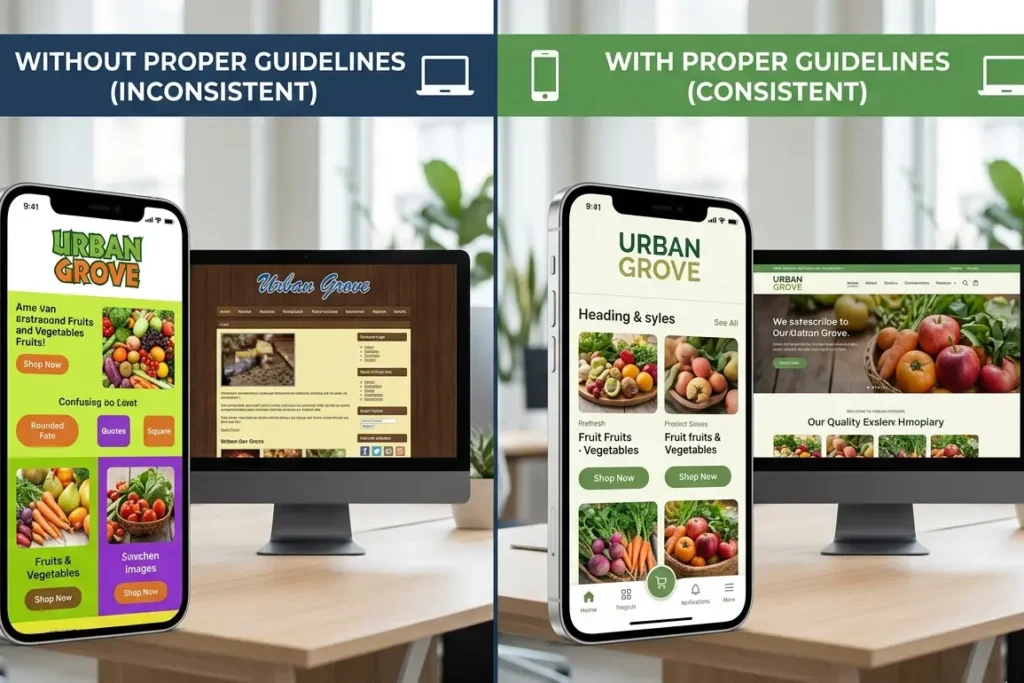
This is the element that almost every branding elements list mentions but never properly explains. A brand guidelines document is the rulebook that tells every designer, freelancer, and social media manager exactly how to use your logo, colours, typography, and tone of voice. Without it, even a well designed brand slowly becomes inconsistent as the team grows. We have seen this happen to clients who had genuinely strong initial branding but lost visual coherence within six months of scaling.
Custom Iconography and Graphics
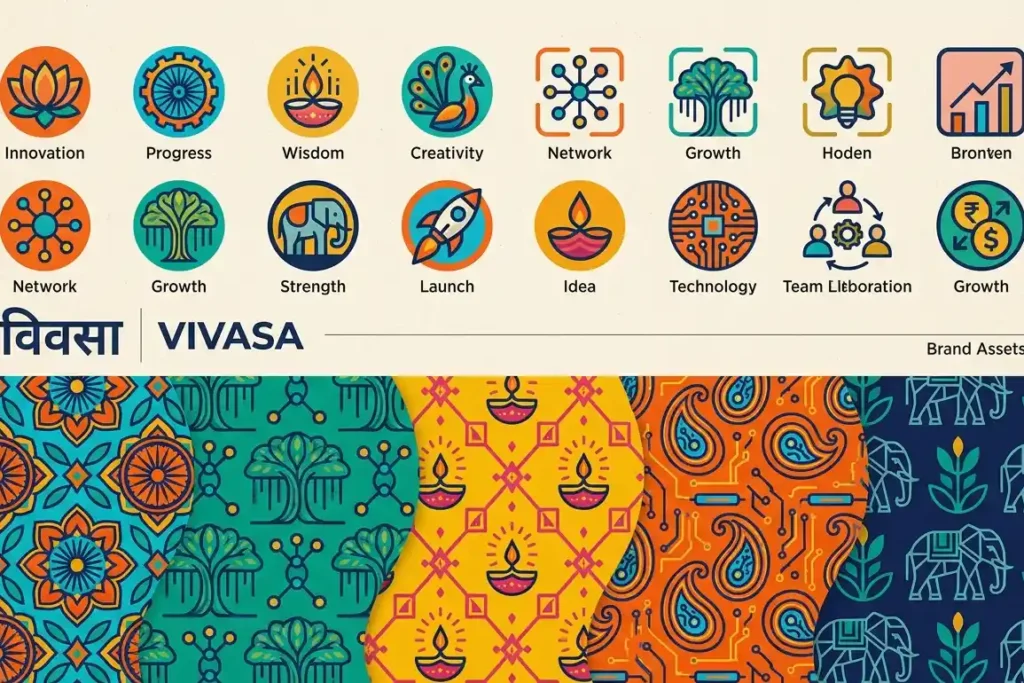
Custom icons, patterns, and graphic motifs create a visual language that customers start associating with you over time. Think of it as the punctuation of your brand. Small and easy to overlook, but meaningfully changing how the whole thing reads.
Visual Identity vs Verbal Identity
People ask us regularly what makes a strong brand identity. The honest answer is that it is the combination of two things most brands treat as separate problems.
Visual identity design is everything the eye processes. Logo, colour, typography, imagery, layout. It creates a first impression in under three seconds. That impression sets the emotional baseline for every interaction that follows.
Verbal identity is everything the voice communicates. Your tone, your taglines, how your product descriptions are written, how you reply to comments on social media. It builds the relationship that visual identity opens the door for.
A mismatch between the two is genuinely costly. We have seen brands with beautiful visual work lose sales because the website copy sounds like it was written by a completely different company. The brands that dominate in India, the ones consumers remember and return to, are almost always the ones that have aligned both sides of their identity.
Mistakes That Kill Indian D2C Conversions
We have audited enough Indian startups to notice the same patterns showing up again and again.
Founders pick trendy colours and fonts that do not match their actual audience. What reads as premium to a buyer in Berlin may read as cold and impersonal to a buyer in Coimbatore or Jaipur. Brand identity elements for startups need to be audience first, not trend first.
Founders skip brand guidelines and then wonder why everything looks slightly different a year later. This happens most when a small team grows quickly. A new freelancer recreates the logo slightly differently. The colours shift. Nobody notices in the moment but buyers do.
Founders treat the logo as the brand. We have had clients come to us saying they just need a logo refresh when the actual problem is that the full branding elements list has never been properly defined. The logo is often fine. It is everything around it that has gone inconsistent.
And nearly everyone underestimates how brand identity design elements appear on mobile. With over 70% of Indian ecommerce traffic coming from phones, your brand needs to look right on a six inch screen before anything else is considered.
How to Build a Strong Brand Identity
Here is the process we follow at Resource Geeks Networks, adapted into steps any startup can work through.
Start with a competitor audit. Look at your top three competitors. What are they doing visually? Where is their identity weak or generic? Where does your actual positioning differ? This step is tedious but it saves enormous time later.
Define your values, tone of voice, and target customer profile in writing before any design work begins. This becomes the filter for every decision. When you are choosing between two colour directions, this document is where the answer lives.
Design the logo, colour palette, typography system, and brand guidelines together, not separately. The guidelines document is not a nice to have. It is what turns a collection of files into an actual working system.
Apply everything to your website first. Your website is the highest stakes brand touchpoint because it is where most buying decisions happen. We build brand systems and websites together at Resource Geeks Networks because the integration produces better results than treating them as two separate projects.
Run basic A/B tests on your homepage and product pages after launch. Sometimes a single colour or typography change moves the needle more than any copy revision would.
FAQ
What are brand identity design elements? They are the visual and verbal components that make a business recognisable and trustworthy. Logo, colour palette, typography, photography style, brand voice, and guidelines. Together they form the system a brand uses to communicate consistently across every touchpoint.
How much does brand identity design cost in India?
A startup level brand identity package in India typically runs between Rs. 30,000 and Rs. 1,50,000 depending on scope. A logo only project sits at the lower end. A full brand system with guidelines, typography, colour palette, and brand voice documentation is usually Rs. 60,000 to Rs. 1,50,000. Agencies that bundle branding with website development tend to produce more integrated results.
What is the difference between brand identity and brand image?
Brand identity is what you design and control. Brand image is what customers actually perceive after experiencing your brand. The gap between the two is where most branding problems live. Strong brand identity components narrow that gap by ensuring what you intend to communicate matches what customers actually feel.
What are the most important brand identity design elements for a new startup?
Start with logo, colour palette, and typography. Once those three are defined and documented in a brand guidelines file, layer in imagery style and brand voice. Trying to build everything simultaneously usually produces an inconsistent result.
How does visual identity design impact sales conversions?
Consistent visual identity design reduces the cognitive hesitation buyers feel when a brand looks disjointed. Across client audits we have seen conversion rate improvements of 15 to 30% when brand consistency issues are resolved alongside website performance work.
Can I update my brand identity without a full rebrand?
Yes. A brand refresh targets specific inconsistencies, typically typography, colour application, or logo scalability, without changing the core identity. It is faster, cheaper, and in many cases exactly the right solution.
Ready to Build Something That Works
If your brand is not converting the way you expected, it is worth looking honestly at the fundamentals before spending another rupee on ads.
At Resource Geeks Networks, we build brand identity systems and websites together. That integration matters because the best brand identity design elements lose their impact if the website they live on cannot support them visually and structurally.
Whether you are a D2C startup trying to stand out, or an existing business that has outgrown its original branding, we help you build something that earns trust from the first visit.
Explore our Branding and Strategy services or our Website Development services to see how we approach both together.
For more context on how branding connects to business growth, read our piece on Branding Agency in Bangalore: Build a Brand That Sells in 2026 and Product Page Design Tips That Actually Sell: The 2026 D2C Playbook for India.