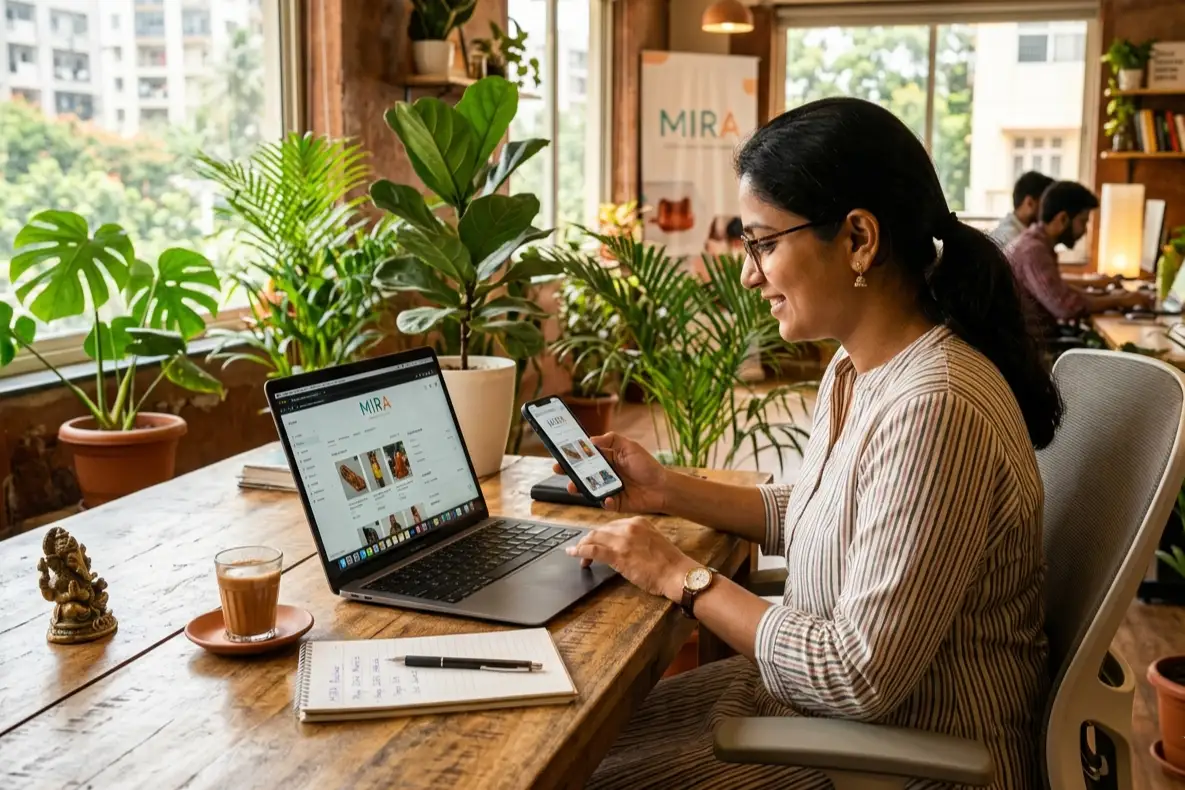
India’s D2C boom isn’t a think-piece anymore. It’s Rs. 108 billion in active market size. It’s a founder in Coimbatore shipping hair oil to Chandigarh with zero retail presence. Ecommerce website development India in 2026 is real, it’s competitive, and the gap between a store that sells and one that just exists is wider than most people realise before they build.
Nobody warns you about that gap. This guide does.
Why D2C Website Development India Is Different
Here’s a story we’ve seen more than once.
A skincare founder, Bangalore-based, solid formulations, a real Instagram following, launches on Shopify and puts Rs. 60,000 into Meta ads. Seventeen sales in month one. The creatives weren’t the problem. The product wasn’t the problem. The checkout had three unnecessary steps, no UPI option at the top, and a return policy so buried that a determined customer still couldn’t find it.
That’s D2C website development India in 2026. The founders who struggle aren’t struggling because their product is bad. They’re struggling because the store wasn’t built for the customer who’s actually showing up: someone on a Rs. 8,000 Android phone in a Tier 2 city, who’s seen enough sketch websites to be properly skeptical, and who needs trust signals, UPI, and clear delivery info before they’ll hand over Rs. 800 for a face serum.
This is a conversion architecture problem. Not a design problem. Our website development services are specifically built around that reality, how Indian buyers actually behave, not how a global Shopify template assumes they will.
What the Market Data Is Telling You
Before you pick a platform or set a budget, these numbers are worth knowing.
The India D2C ecommerce market was valued at USD 87.5 billion in 2025 and is projected to grow from USD 108.76 billion in 2026 to USD 322.1 billion by 2031, at a CAGR of 24.30%. That’s not enterprise growth. That’s mostly small brands, focused catalogs, and founders who cut out the middleman and built directly.
As of 2026, over 10,000 active D2C brands sell exclusively or primarily online in India. Many are tiny teams, sometimes three or four people, building national brands through Shopify or custom platforms.
According to IBEF, India has already overtaken the United States to become the world’s second-largest e-retail market, with 270 million active online shoppers and a D2C segment heading toward USD 60 billion by 2027.
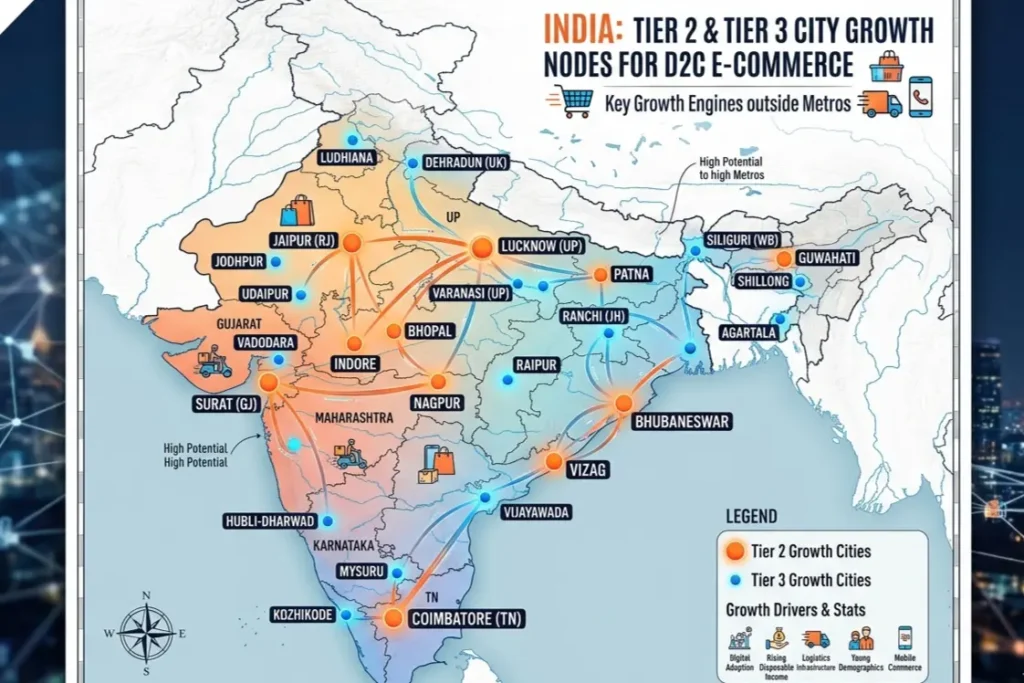
The part that matters most for how you build: roughly 60% of all new online shoppers entering the Indian market are now coming from Tier 2 and Tier 3 cities. If your online store development India strategy is still optimised for a metro customer on a good laptop, you’re chasing the minority.
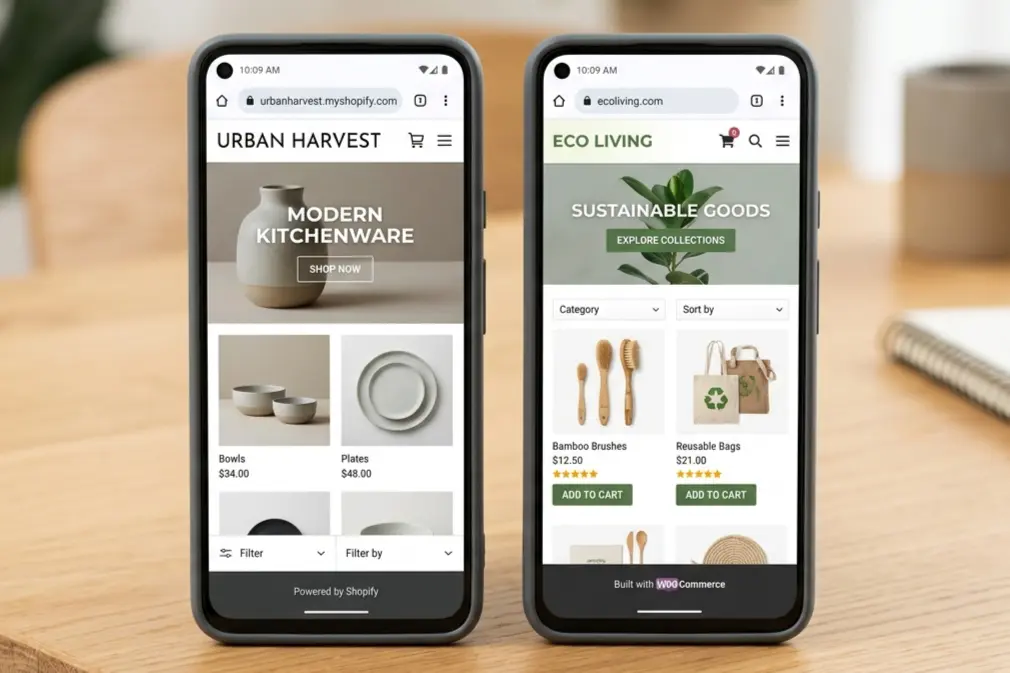
Shopify vs WooCommerce for Indian D2C Brands
We have this conversation almost every week. And the honest answer is less complicated than the internet makes it.
Shopify development India is the right call when you need speed and don’t have someone technical on your team. Launch in 2 to 3 weeks. Razorpay and UPI are built in. Security and hosting are handled. The cost grows as you scale, transaction fees, monthly app subscriptions, and there is a real ceiling on how much you can customise without paying a lot more. But for a first store, or for testing a new product line, the speed-to-market advantage is genuine.
WooCommerce is better when you want to own everything. Your data, your infrastructure, your customer records, no platform taking a cut, no ceiling on customisation if the development is done well. It needs maintenance. It needs someone who knows what they’re doing. But for an ecommerce development company India working with established brands, WooCommerce at scale almost always wins on total cost.
Custom ecommerce website development India is for when the standard platforms genuinely don’t fit your model. Complex B2B pricing, multi-vendor setups, ERP integrations that need to work perfectly at all times. Higher upfront investment, full ownership of what gets built.
The mistake that keeps coming up: choosing Shopify because someone recommended it in a group, then rebuilding on WooCommerce 18 months later when the monthly fees hurt. Platform choice should follow a business model. Full stop. We’ve written more on how each platform behaves at scale in our main ecommerce development blog.
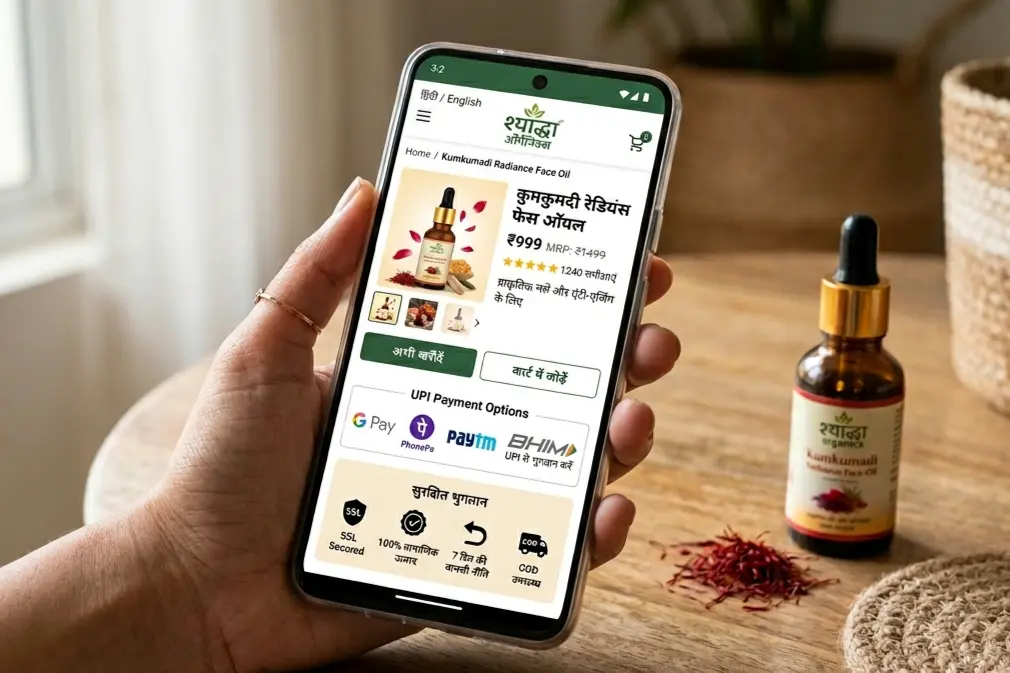
What Features Does a D2C Ecommerce Website Need in India?
Not the generic list. The India-specific one.
UPI at the top of checkout. India processed over 20 billion UPI transactions in a single month last year. Putting UPI at the bottom of your payment options, behind card and net banking, is one of those small decisions that quietly costs conversions every single day.
COD with return-reduction logic built in. COD return rates of 25 to 30 percent are driving real working-capital stress for Indian D2C brands. You can’t remove COD in most categories, buyers still need it for trust, but a small prepaid incentive, even Rs. 30 to Rs. 50 cashback, moves people off COD meaningfully.
Product pages that pre-answer doubt. Research on Indian D2C buyer behaviour found that 54% of shoppers abandon carts because of inconsistent product details, and 53% leave because of weak product titles or descriptions. Your product page is doing sales work. It needs to be written that way.
ONDC readiness. The nationwide rollout of ONDC is accelerating D2C adoption and reportedly cutting acquisition costs by up to 20% for brands already on the network. Ignoring it during the build means retrofitting it later, which is always more expensive.
Regional language support. This one’s often skipped because the development team is metro-based and the founder is too. But Tier 2 conversion rates shift noticeably when copy speaks the buyer’s first language.
The UI UX design logic behind all of this, where trust signals sit, how copy is structured, what happens at hesitation points, is built into every store we work on before a single screen goes to development.
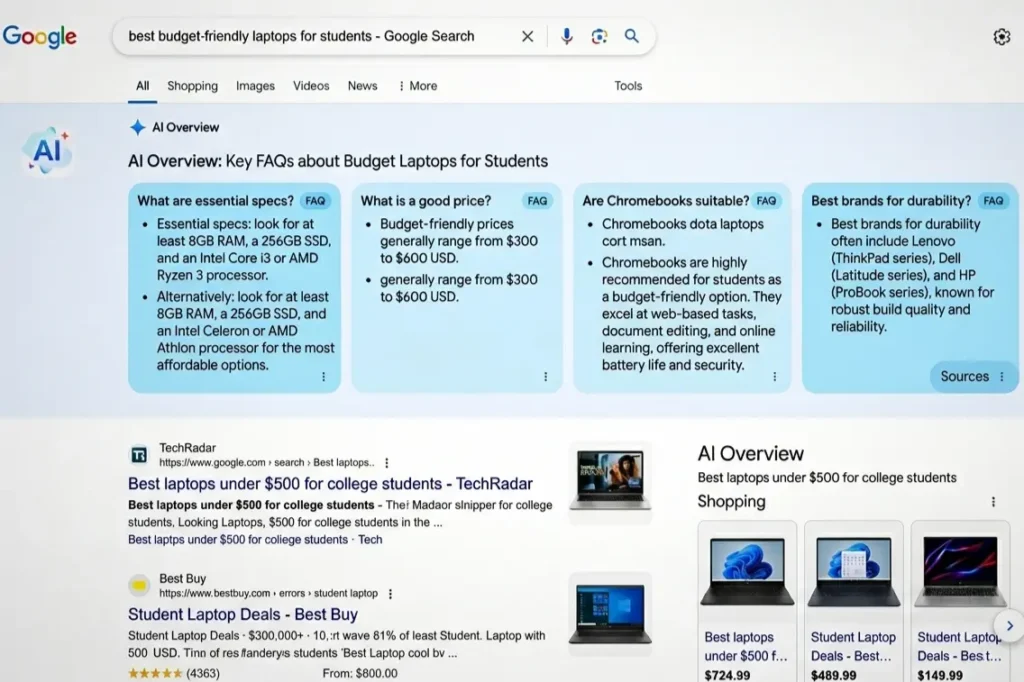
How Do I Rank My Ecommerce Store on Google in India?
The thing most guides get wrong here: they treat SEO like something you bolt on after launch. It isn’t.
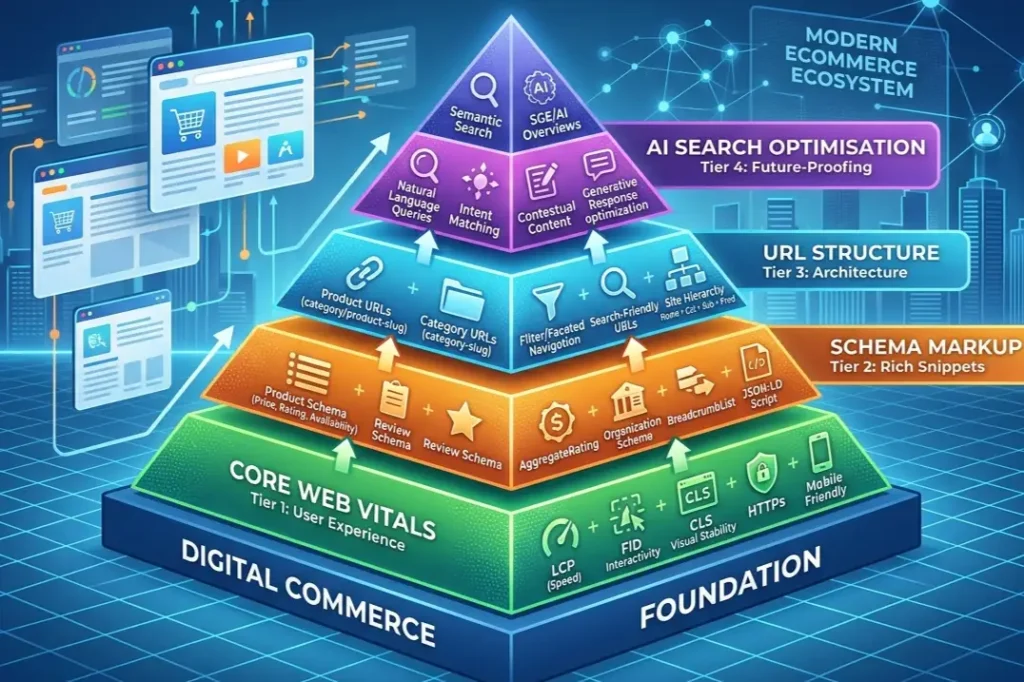
URL structure, schema markup, page speed, Core Web Vitals, these are development decisions. Getting them wrong at the foundation means every SEO investment you make later is fighting the architecture instead of compounding on it.
And how Indian shoppers search has genuinely changed. They’re not typing “buy moisturiser India” anymore. They’re asking “which moisturiser is good for dry skin in winter,” the way they’d talk to someone they trust. Google AI Overviews, ChatGPT, and voice search pull structured, direct answers. Your ecommerce website development India content needs clear headings, structured data, and writing that matches real questions, not keyword density.
City-level content is also underused. Searches like “D2C hair care brand free delivery Surat” carry strong purchase intent and much lower competition than broad category keywords. Our website maintenance and SEO guide covers how to stay on top of this post-launch.
Ecommerce Website Development Cost India: Real Rs. Numbers
Here are the actual numbers. No “prices vary, contact us.”
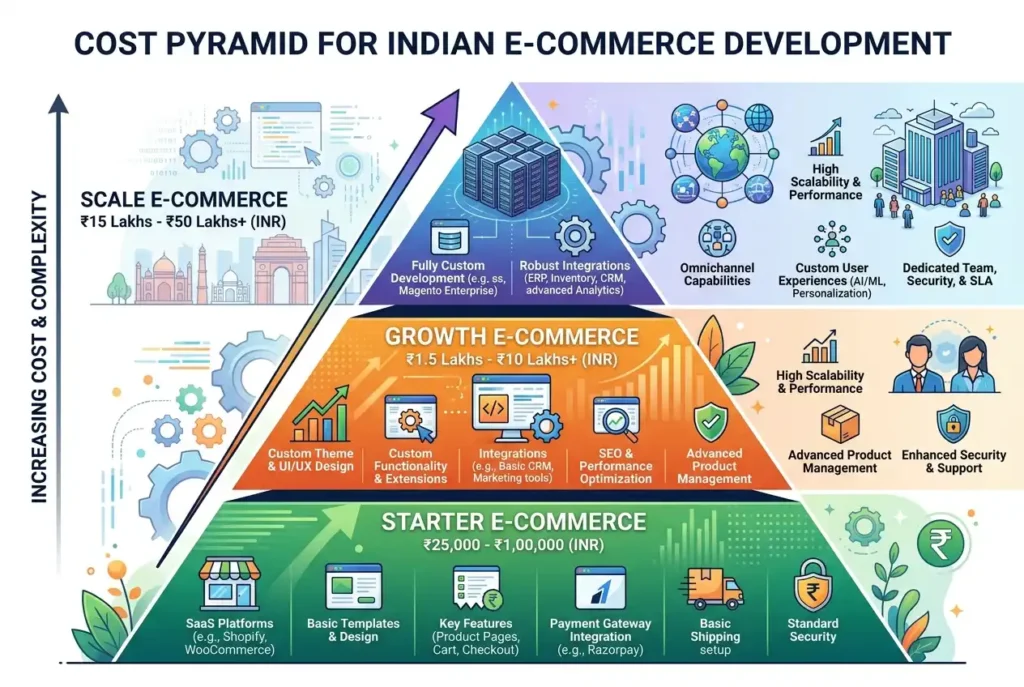
Rs. 25,000 to Rs. 60,000 gets you a starter store. Shopify or WooCommerce with brand customisation, up to 50 products, Razorpay and UPI integration. Good for testing whether demand is real before committing to a bigger build.
Rs. 60,000 to Rs. 1,50,000 is a proper growth D2C store. Custom UI/UX, up to 500 products, advanced search and filters, CRO basics including cart recovery, trust signals, and exit intent, plus analytics setup. This is where a serious first D2C store should sit.
Rs. 1,50,000 to Rs. 5,00,000 and above is a scale build. Custom development, ERP and CRM integration, WhatsApp automation, subscription billing, multi-language support. For brands already doing real revenue who need the infrastructure to match.
What founders consistently underestimate is the cost after launch. Hosting, plugin renewals, security patches, seasonal catalog updates. A store that launched well and got zero investment in maintenance will degrade quietly, and it usually takes about a year before the damage becomes visible. We’ve watched it happen too many times. Our pricing page shows full inclusions at each tier, including what post-launch support looks like.
The One Thing Most Indian D2C Stores Get Wrong
Every list of top ecommerce development company India tips mentions platform selection and load speed. This one doesn’t appear anywhere.
Most D2C stores are built for the founder’s confidence. Not the customer’s doubt.
The founder knows the product works. The new customer, who just came from an Instagram ad and has never heard of this brand, does not. They’re uncertain. They’re looking for reasons to trust, and if they don’t find them in the first 10 seconds, they leave.
Research tracking Indian D2C buying behaviour found that 48% of shoppers will exit a store if reviews and ratings are low or absent. Not if the product is overpriced. Not if the design is off. Because they couldn’t find proof that anyone had bought this before and been fine.
Before you spend another rupee on ads, make sure your store answers three questions every first-time Indian buyer is quietly asking. Is this brand real? Will this actually arrive? What happens if it doesn’t work?
Reviews above the fold. Delivery timelines on the product page, not in the footer. A return policy written in plain language that doesn’t sound like a lawyer wrote it to avoid paying anyone back.
These are the details that determine whether ad spend compounds or just bleeds. Our work on ecommerce UI UX design starts with those three buyer questions before we draw a single wireframe.
FAQ
How much does it cost to build an ecommerce website in India?
Starter stores run Rs. 25,000 to Rs. 60,000. A growth D2C store with custom UI and CRO setup sits between Rs. 60,000 and Rs. 1,50,000. Scale builds with custom development start at Rs. 1,50,000 and go higher depending on integrations. These are build costs, maintenance and hosting are separate. Full breakdown at our pricing page.
Which is better, Shopify or WooCommerce for Indian stores?
Shopify for speed and simplicity at an early stage. WooCommerce for full ownership and lower long-term cost if you have the right development support. The right answer follows your business model, not what’s trending.
How long does it take to build an ecommerce website in India?
Starter stores take 2 to 3 weeks. Growth D2C stores with custom UI run 4 to 6 weeks. Custom scale builds take 3 to 6 months. Most delays come from the content side, product photography, copy, brand assets, not development.
Why Resource Geeks Networks
We’re a Shopify Partner, Webflow Expert, and Google Partner studio. We’ve built 300 plus websites for D2C brands, startups, and enterprises across India, the UK, and global markets, across skincare, fashion, health, and FMCG.
We don’t start with a platform recommendation. We start by understanding what the business actually needs to grow. If you want a team that puts conversion logic behind every build decision, not just a theme with your colours, come talk to us.
Ready to build a D2C store that actually sells? Start the conversation at resourcegeeksnetworks.com/contact
Written by the Resource Geeks Networks Design and Development Team, Bangalore. Shopify Partner. Webflow Expert. Google Partner.