
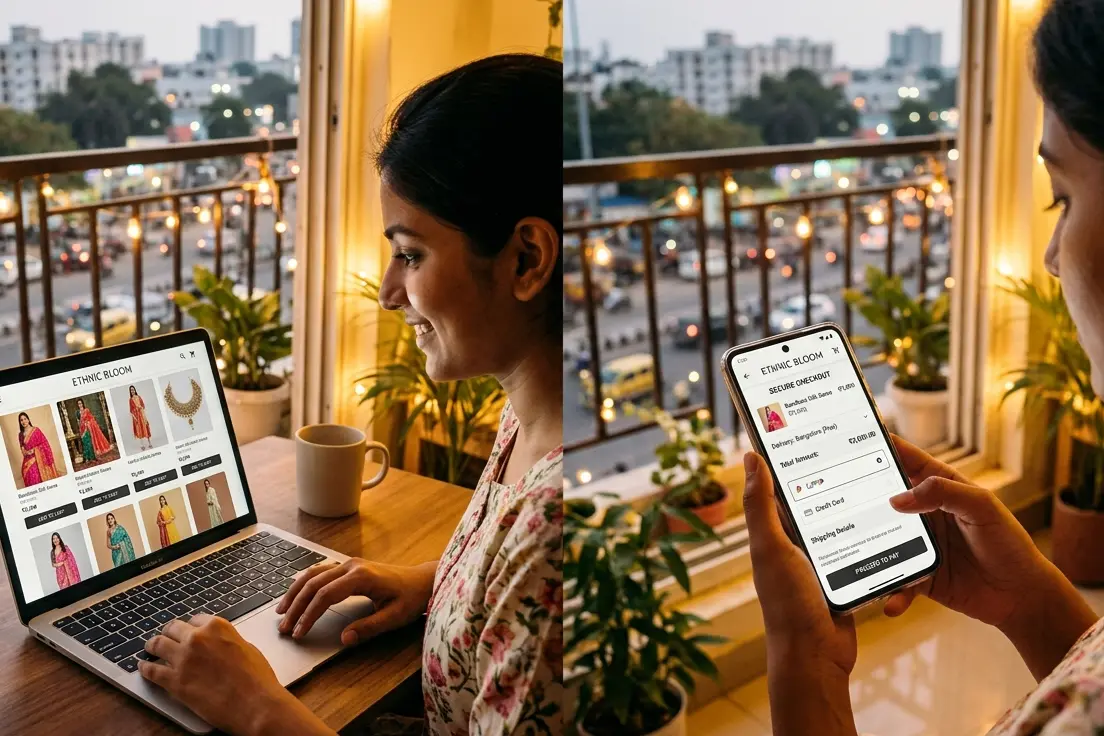
We built a store once for a fashion brand. Good products, decent traffic, real demand. Six months in, they were ready to shut it down. Not because the business was wrong. Because the checkout broke on mobile and nobody caught it for three weeks.
That is the version of ecommerce website development nobody talks about. The quiet failures. The stores that technically work but functionally bleed.
This guide is written from experience, not theory. Here is what actually matters when you are building an online store in 2026.
What Ecommerce Development Actually Is
It is not putting products on a page. Anyone can do that.
Ecommerce website development is engineering a system where a stranger lands on your store, finds what they want, trusts you enough to pay, and actually completes the transaction without something going wrong. That system has to work on a cheap Android phone on a 4G connection in Tier 2 India, and it has to work on a MacBook in London. Simultaneously. Every time.
Most businesses do not think about it that way when they start. They think about how it looks. Then they launch and discover how it performs. Our website development services are built around that performance reality, not just the visual one.
Why India Cannot Wait
We work with businesses across India and international markets. The Indian clients who hesitated three years ago are now playing catch-up with brands that moved earlier.
According to the India Brand Equity Foundation, India’s ecommerce market is projected to cross $350 billion by 2030, driven by rapid smartphone adoption, digital payments, and a growing population that increasingly prefers shopping online.
That trajectory is already visible in day-to-day buying behaviour. People who used to walk into a store now open an app. People who used to call to order now expect to complete a purchase in under two minutes on their phone. According to Statista, India, with a projected 24.1% increase in online sales, is estimated to reach $142.5 billion in ecommerce sales and ranks among the fastest-growing markets globally.
The buyers are here. The infrastructure is here. The only thing missing, for many businesses, is a store that is actually built to handle them.
Which Type of Store Do You Actually Need
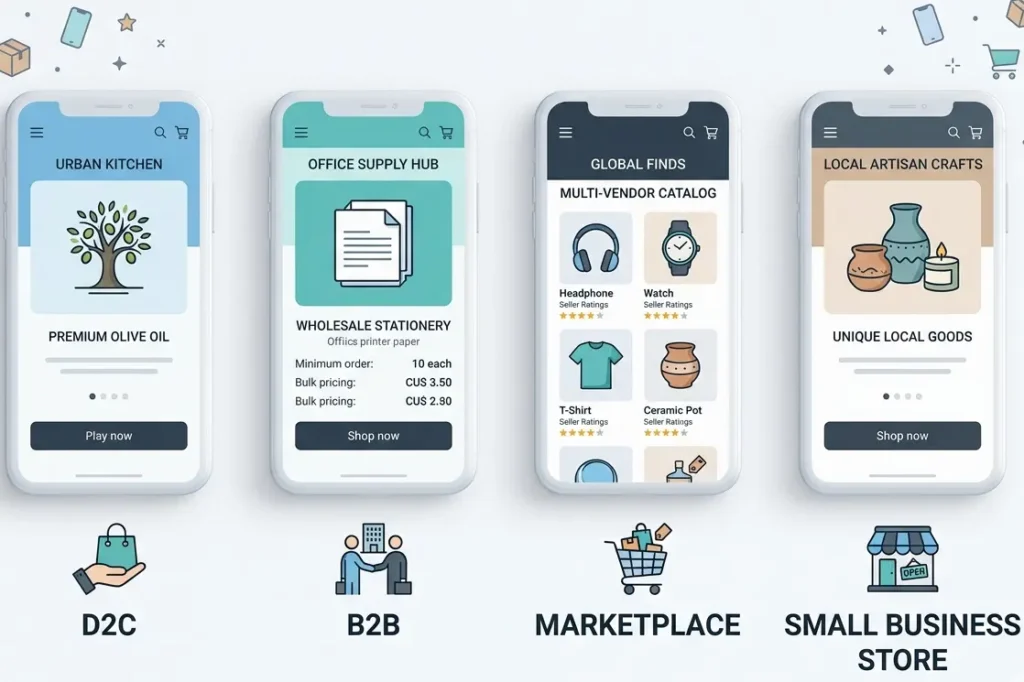
This is where a lot of money gets wasted. Someone builds a full marketplace when they needed a simple D2C store. Or they build a basic Shopify setup when their business is fundamentally B2B. Picking the wrong model early is expensive to unwind.
D2C stores are for brands selling directly to end consumers. Trust signals, brand voice, and mobile experience are everything here. People are not just buying a product. They are deciding whether they trust you.
B2B platforms involve higher order values, multiple decision-makers, and custom pricing logic. The UX is completely different from consumer retail. It has to be built that way.
Marketplaces are complex. Multiple sellers, multiple trust relationships, and infrastructure that has to serve everyone at once. Not a starter project.
Small business ecommerce is where most of our best work happens. A focused catalog, a fast checkout, and a store that does not confuse people will outperform a bloated one with five times the products every time. Custom ecommerce website development services at this scale are about clarity, not complexity.
What Makes a Store Convert
We are not going to give you a list of twenty things. Here are the ones that actually matter.
Speed kills, or saves you. Google research shows that when a mobile site takes five seconds to load, the probability of a bounce increases by up to 90%. We have seen stores double their conversion rate by fixing load time alone. Nothing else changed. Just speed.
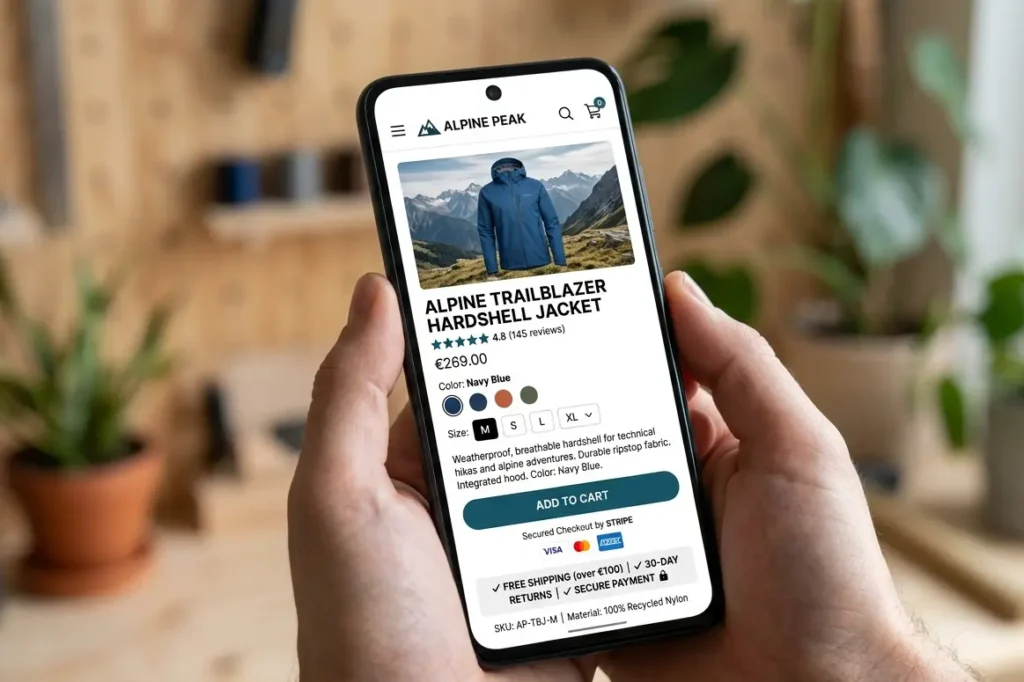
Mobile is not a feature. It is the store. According to Statista, mobile commerce will account for roughly 59% of all online retail sales in 2026. If your store was designed for desktop and squeezed into mobile, customers feel that friction even when they cannot name it.
Search is a sales tool. Online visitors who use a site’s internal search are two to three times more likely to convert than those who do not. A broken or slow search bar on a catalog-heavy store is one of the quietest revenue leaks there is.
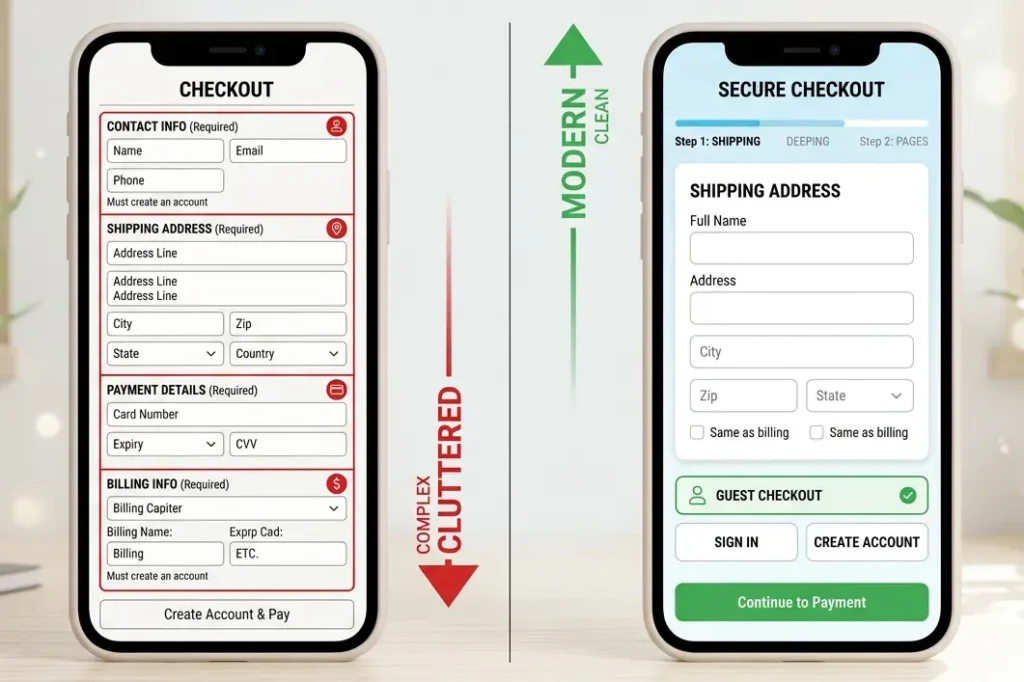
UX is the actual product. How someone moves from a product page to a completed order is not a design preference. It is a business decision. Confusing layouts, buried buy buttons, and multi-step checkouts cost you sales every single day. This is why ecommerce UI UX design is treated as a core build decision in every project we take on, not something applied at the end.
How long does it take to build an ecommerce website? A well-scoped small business store takes four to eight weeks. Marketplace and enterprise builds run three to six months depending on scope.
Shopify or WooCommerce
Short answer: it depends on what your business actually needs, not what is most popular right now.
Shopify is faster to launch. Hosting, security, and integrations are handled. For Indian brands testing a market or scaling D2C without an in-house tech team, that speed matters. The cost grows as you scale, and the flexibility ceiling is real.
WooCommerce is for businesses that want to own everything. No platform fees eating into margins, full control over data, and no ceiling on customisation if the development is done properly. It needs ongoing attention. It rewards that attention.
Custom builds are for businesses whose operations do not fit a standard platform. B2B workflows, multi-vendor logic, complex integrations. Higher upfront investment. Full ownership of the outcome.
The platform is a tool. Building on the wrong one because it looked easy is one of the most common reasons businesses end up rebuilding stores within two years.
SEO Starts at the Build Stage
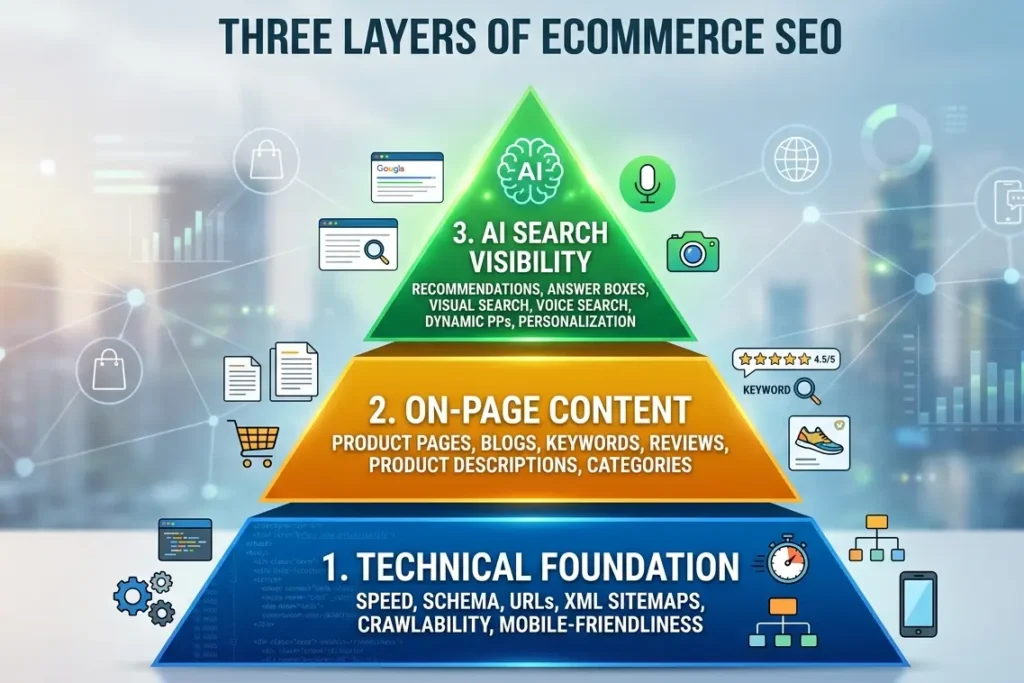
This is the part most ecommerce web development services articles get wrong. They treat SEO as something you add after the store is live. It is not.
URL structure, schema markup, page speed, Core Web Vitals, and how your category hierarchy is built are all decided during development. If these are wrong at the foundation, no amount of content will fix them cleanly.
The way people search has also changed. Shoppers are no longer typing short keyword phrases. They are asking real questions the way they would talk to a sales associate. Google AI Overviews, ChatGPT, and voice search surface answers, not just links. Shopping website development in 2026 means writing for that reality from the first page.
Conversion Is a Design Decision
Traffic without conversion is just an expense.
According to GoodFirms, 75% of customers form opinions about a brand’s trustworthiness based on website design quality alone. Your store is being judged before a single product description is read. That judgment happens in seconds and it is almost entirely visual.
Reviews above the fold. Visible security signals. BNPL options through Simpl, LazyPay, or Razorpay for higher-value purchases. One clear action per page, not three competing ones. These are not nice-to-haves. They are the difference between a store that closes sales and one that educates browsers who buy somewhere else.
How do I increase sales on my ecommerce website? Fix the checkout before you spend more on ads. Three steps or fewer, guest checkout on, shipping timelines visible, cart recovery emails live. These cost far less than a campaign and often move the needle faster.
What Does It Cost in India
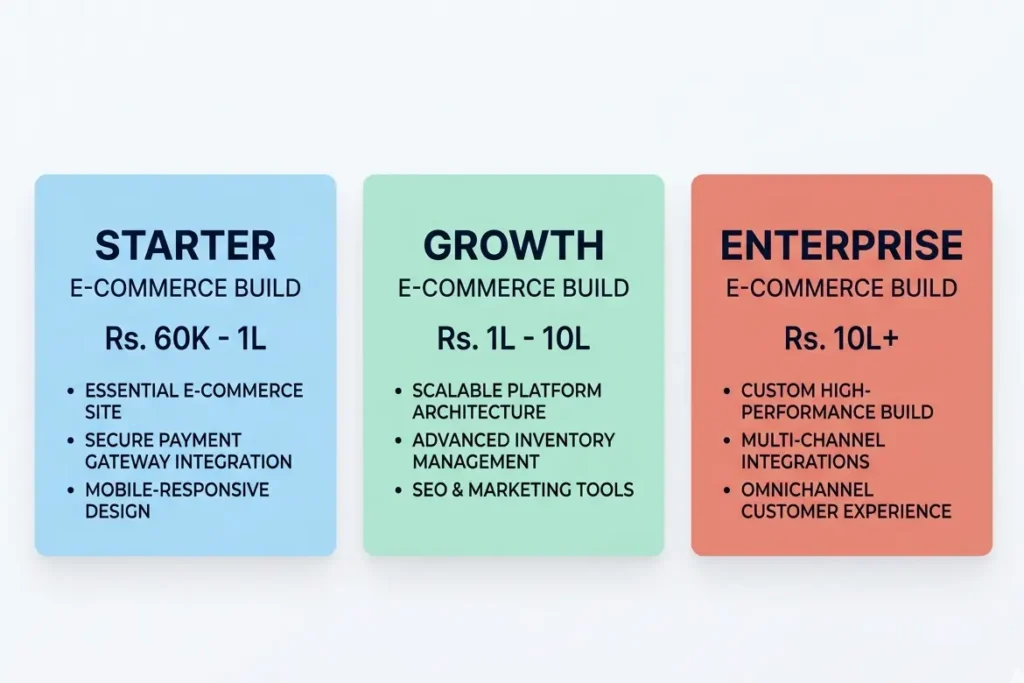
According to GoodFirms, whose web development cost survey covered over 100 companies globally, website development costs range from $3,000 to $60,000 or more depending on complexity. In India the numbers are different. A small ecommerce store with up to 100 products typically costs between Rs. 60,000 and Rs. 1,00,000. Medium platforms with up to 1,000 products range from Rs. 1,00,000 to Rs. 10,00,000.
Those are build costs. The part most businesses underestimate is what comes after. Hosting, plugin renewals, security patches, performance monitoring, and seasonal updates are ongoing. Without a plan for ecommerce website maintenance, a store that launched well will quietly degrade within a year. We have seen it happen to businesses that spent serious money on the build and nothing on what followed.
FAQ
What does ecommerce website development include?
Front-end design, back-end development, payment gateway integration, product and inventory management, SEO foundations, mobile optimisation, and post-launch support. Both what customers see and what powers it underneath.
How much does an ecommerce website cost in India?
Rs. 60,000 to Rs. 1,00,000 for a small business store. Rs. 1,00,000 to Rs. 10,00,000 for mid-scale platforms. Enterprise builds go higher depending on scope and integrations.
Shopify or WooCommerce, which should I choose?
Shopify if you want to launch quickly without managing technical infrastructure. WooCommerce if you want full ownership and long-term cost efficiency. The right answer depends on your business model, not a trend.
How do I get my ecommerce store to rank on Google?
Build the technical foundation right during development. Clean URLs, schema markup, fast load times, mobile-first structure. Then write content that answers real questions in plain language. It compounds, but only from a solid base.
What does an ecommerce store actually need in 2026?
Mobile-first design, a reliable payment gateway, functional product search, cart recovery, SSL security, and SEO foundations. BNPL, AI recommendations, and multi-channel inventory are rapidly becoming standard expectations, not extras.
Why Resource Geeks Networks
We are a Shopify Partner, Webflow expert, and Google Partner studio working with businesses across India, the UK, and global markets. We have delivered over 300 websites across ecommerce, software, and corporate categories.
We do not pitch a platform before we understand your business. We do not hand over a template and call it a build. Every store we work on starts with one question: what does this business need to actually grow?
If that is the kind of team you want building your store, talk to us.
Start a project at resourcegeeksnetworks.com
Written by the Resource Geeks Networks team. We build ecommerce stores, digital platforms, and design systems for businesses in India and international markets. Shopify Partner. Webflow Expert. Google Partner.