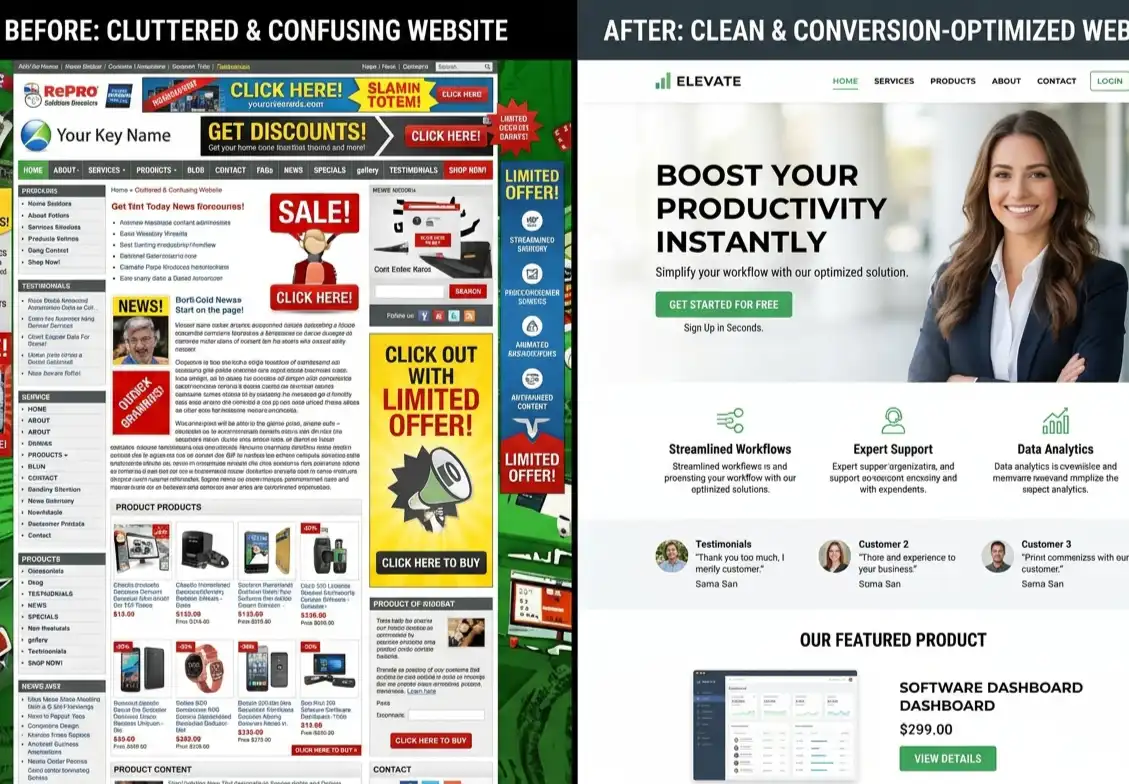
The web design industry in India is full of agencies that will hand you a beautiful website and call it a day. What they won’t tell you is that a beautiful website and a website that converts are two very different things. We’ve seen this gap up close, working with startups, service businesses, and e-commerce brands across Bangalore and beyond. And the pattern is almost always the same: the design looks fine, but nobody’s calling.
That’s the problem UI UX design for websites is built to solve.
What Is UI UX Design and Why Do People Mix Them Up?
We get this question from almost every new client, and it’s a fair one.
UI UX design for websites covers two disciplines that are deeply connected but serve different purposes. UI (User Interface) is the visual side: how your buttons look, which fonts you use, how colour guides attention across a page. UX (User Experience) is the behavioural side: whether someone can actually navigate your site, find what they need, and feel confident enough to take action.
Here’s an analogy we use with clients. Imagine walking into a restaurant that’s beautifully decorated. Soft lighting, great music, lovely menu. But you wait ten minutes and no one comes to your table. You can’t figure out how to call the waiter. You leave before ordering. That’s what poor UX does to a website, regardless of how good the UI is.
Most businesses spend nearly all their budget on UI and treat UX as an afterthought. We’d argue that’s the single most common reason well-designed Indian business websites still underperform.
Both disciplines deserve proper attention, which is why our UI UX Design services treat them as one integrated process rather than two separate deliverables.

The Real Cost of Ignoring UX
We want to say something most design blogs won’t: ignoring UX doesn’t just make your website feel clunky. It costs you real money, quietly and consistently.
Here’s what we see regularly when auditing websites for new clients. A business has decent traffic, a reasonable product, and an active marketing budget. But the contact form is buried three scrolls down. On mobile, the navigation collapses in a way that hides the services page entirely. The CTA button is the same grey as the background. Nobody fills the form. The business assumes the product isn’t resonating. In most cases, the product is fine. The experience is broken.
Improving user experience design website performance doesn’t require a complete visual overhaul. Sometimes it’s repositioning a button. Sometimes it’s shortening a form from eight fields to three. These aren’t glamorous changes. But they’re the ones that move the needle.
If you’re wondering what investing in proper UX actually costs for an Indian business, our pricing page is transparent about that.
What Great Website Interface Design Actually Looks Like
We’re going to be direct here because a lot of design writing is vague about this.
Great website interface design is not about winning awards. It’s about reducing the distance between what a visitor wants and the moment they get it. Every pixel either helps or hurts that journey.
From hundreds of websites we’ve built and audited, here’s what actually works:
Clarity wins over cleverness every time. If a visitor can’t understand what your business does within five seconds of landing on your homepage, your UI has failed regardless of how sophisticated it looks. The question every design decision should answer is simple: does this make it easier or harder for someone to take action?
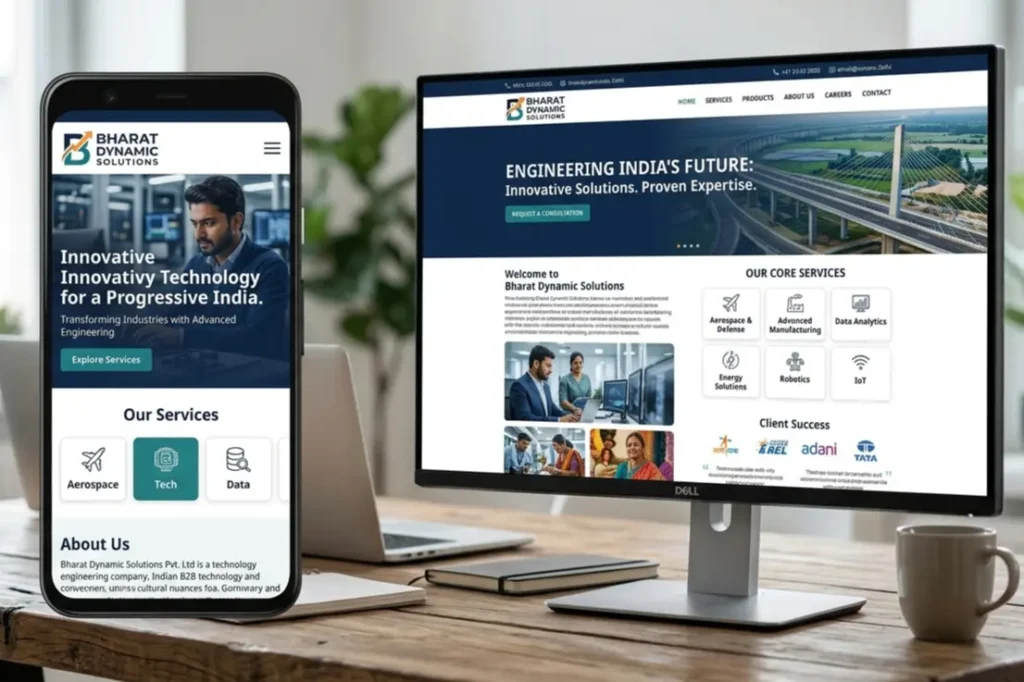
Mobile experience is not optional in India. Over 70% of web traffic in India comes from mobile devices. We’ve audited websites where the desktop version looked great and the mobile version was essentially unusable, with text overflowing the screen, buttons too small to tap, and forms that didn’t function. This is one of the most consistent failures we find.
Trust signals need to be placed where doubt lives, not at the bottom of the page. In Indian markets particularly, people are careful before they share contact details or make a purchase. Testimonials, partner logos, and certifications work best when they appear near your CTA, not as an afterthought in the footer.
You can see how we apply these principles in our actual project work on our case studies page.
UX Research: The Step Most Indian Businesses Skip
We’ll be honest about something uncomfortable. When clients come to us with a tight deadline, UX research is often the first thing they want to skip. We understand the pressure. But we’ve also seen what happens when it gets skipped, and it’s rarely good.
Before we touch Figma or sketch a single wireframe, we need to understand who is actually using the website and what’s stopping them from converting. This means building user personas grounded in real behaviour, not demographic assumptions. It means mapping the user journey step by step and asking at each point: what could go wrong here?
One thing most competitor blogs on UI UX design for websites don’t tell you is that this research phase is where the most valuable insights live. It’s where you discover that your target users don’t read long paragraphs on mobile. That they distrust websites without visible phone numbers. That they abandon forms the moment they see more than four fields.
These aren’t things you can guess. They need to be uncovered. And the findings directly shape what happens in professional website development later, because the development team then builds from a brief grounded in actual human behaviour.
Wireframing to Live Website: Where Expensive Mistakes Get Prevented
We’ve had clients come to us after spending four or five months with another agency, only to realise at the end that the finished website didn’t actually serve their business goals. The structure was off. The user journey was unclear. The contact flow was buried. The culprit in almost every case? No wireframing process.
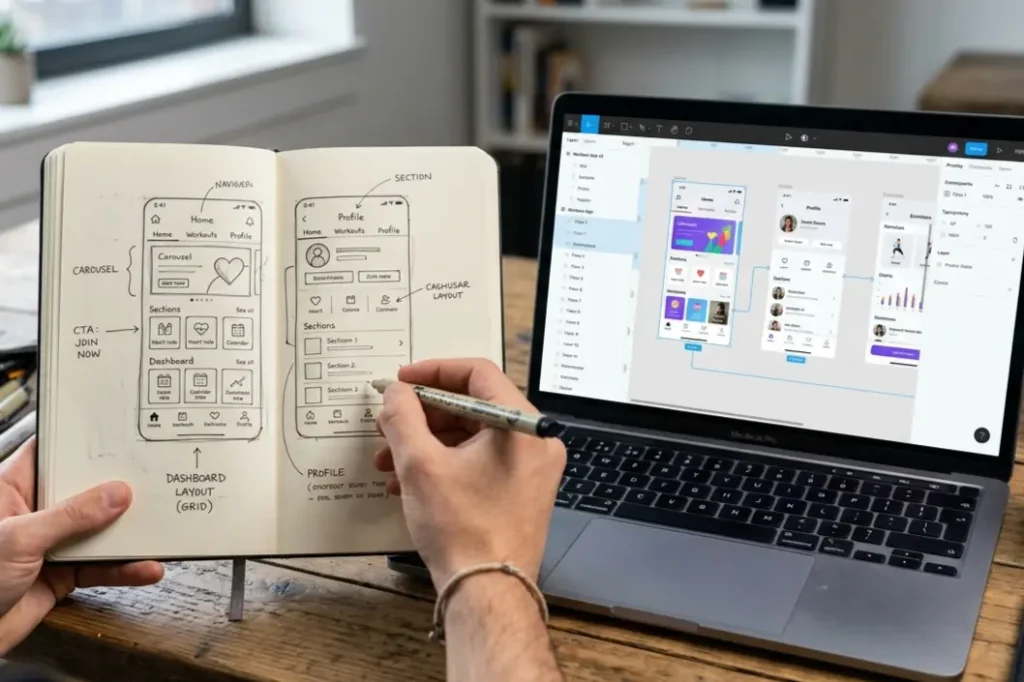
Wireframes are unglamorous on purpose. No colours, no images, just the skeleton of a page. What they do is force every structural decision to be made early, when a change costs an hour of work rather than a week of redevelopment.
We move from wireframes to interactive prototypes that let clients walk through the experience before a single line of code is written. It sounds like an extra step. It saves weeks.
This is also where design hands off cleanly to frontend development implementation. When both sides work from the same prototyped logic, the build phase doesn’t unravel the design decisions that were made carefully upstream. Fewer revisions, faster launches, better outcomes.
How AI is Changing Website UI UX Design in 2026
This is the part of the conversation most Indian businesses aren’t having yet, and we think it matters.
AI isn’t replacing good design. What it’s doing is raising the bar significantly for what “good” means.
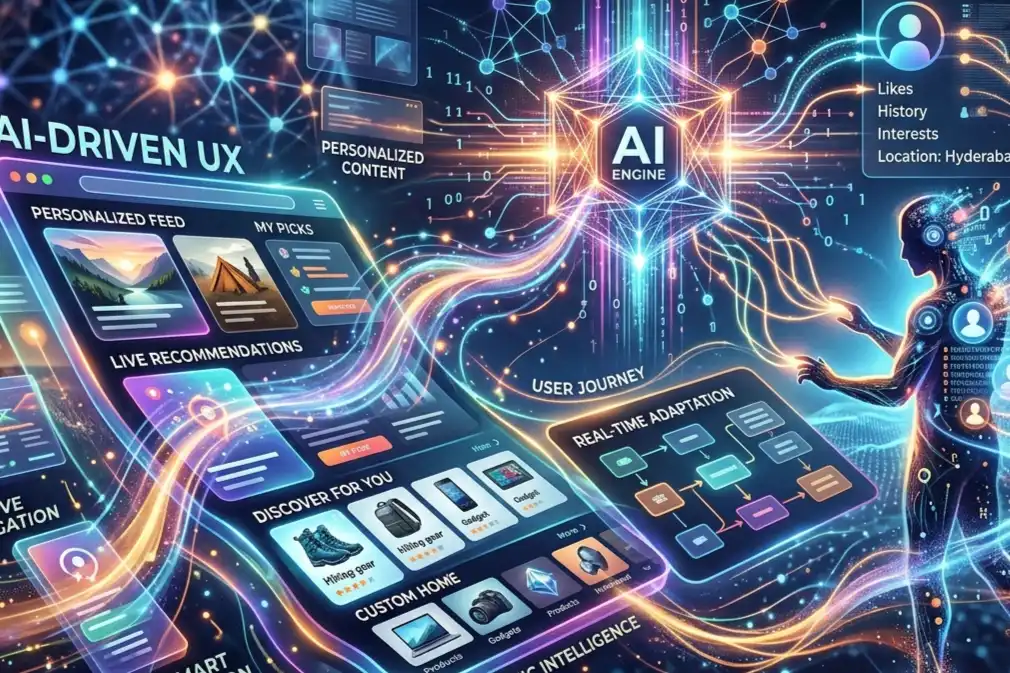
The websites that are winning in 2026 aren’t just responsive and well-structured. They’re starting to learn from user behaviour. A returning visitor who’s checked your pricing page twice sees a slightly different homepage than someone who landed from a blog post. A user who scrolls quickly past long text sections gets a version of your service page that front-loads the key information. These aren’t hypothetical features. They’re becoming the standard.
There’s also the question of how AI search engines like ChatGPT and Google AI Overview decide what to cite. These systems don’t rank pages the way traditional search does. They read them. A page with clear headings, well-organised content, and honest, specific information is far more likely to get surfaced as a source than one that’s padded or vague. Good UX structure and good AI discoverability are increasingly the same thing.
For e-commerce specifically, this shift is significant. Ecommerce user experience design now needs to account for product discovery patterns that AI is reshaping. Users arriving from an AI recommendation often already know what they want. The UX question becomes: how quickly can you confirm you’re the right choice and remove every obstacle between that belief and a completed purchase?
What is the difference between UI design and UX design for a website?
UI is what people see. UX is what they experience. A website can be visually polished and still have terrible UX if visitors can’t find what they need, don’t trust the page enough to engage, or hit friction at any point in the journey. The two disciplines work best together, which is why separating them into different workstreams or different budgets usually ends in a site that looks good but doesn’t perform.
How long does it take to hire a UI UX designer for website development?
For a standard business website, the discovery and design phase typically runs between two and six weeks before development begins. At Resource Geeks Networks, we don’t skip this phase to hit an artificial deadline, because the decisions made here determine how the rest of the project performs. Larger or more complex builds, particularly e-commerce platforms with multiple user journeys, naturally take longer and should.
Case Studies from Our Work
One of our clients, a professional services firm based in Bangalore, came to us with a website that was visually clean and presented well on desktop. Their traffic was reasonable. Their lead volume was not.
When we audited the site, we found the contact form was below the fold on every key page, the mobile navigation was broken in a way that hid the services section entirely, and there were no trust signals near any CTA. We restructured the information architecture, moved and simplified the contact touchpoints, and fixed the mobile experience. Their monthly enquiry volume more than doubled without any change to their marketing spend.
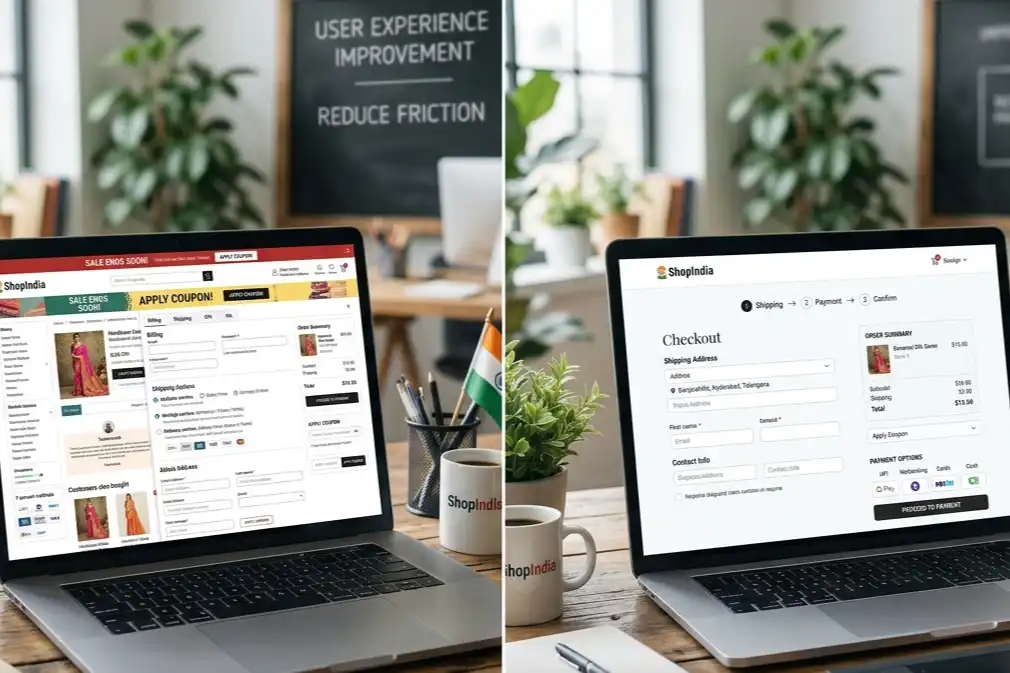
A second client ran a Shopify store with a persistent cart abandonment problem. The checkout flow had six steps where three would have done the job. It asked for account creation before purchase. There were no security indicators near the payment fields. We streamlined the flow, introduced guest checkout as the default option, and placed trust badges where users were making their final decision. Abandonment dropped noticeably within the first month.
Neither of these transformations involved a full visual redesign. They involved understanding how real users behaved and removing what was getting in their way.
Why Resource Geeks Networks
We’re a Bangalore-based design and technology studio that works with businesses across India and international markets. We’re Webflow Partners, Google Partners, Shopify Partners, and listed on DesignRush. We’ve delivered work for brands in sectors ranging from consumer goods to engineering to wellness.
What we’re proudest of isn’t the partnerships or the listings. It’s the calls we get from clients three months after launch saying the website is finally doing what they needed it to do.
We don’t treat design as a visual deliverable. We treat it as a business diagnosis. When we talk about improving website interface design, we’re talking about fixing the specific part of your customer journey that’s leaking the most revenue.
If you want to hire UI UX designer for website development who will ask uncomfortable questions first and design second, that’s how we work.
Frequently Asked Questions
What does UI UX design for websites actually include?
It covers UX research and user persona development, user journey mapping, information architecture, wireframing, interactive prototyping, visual UI design across all breakpoints, usability testing, and iteration before handoff to development. A complete engagement includes all of these, not just the visual design phase.
How do I know if my website needs a UX redesign?
The most common signals are a high bounce rate, low time on page, visitors arriving but not contacting you, high cart abandonment in e-commerce, and recurring feedback from prospects that the website is confusing or hard to navigate. If more than one of these applies, the problem is almost certainly structural rather than visual.
Does better UX actually improve search rankings?
Yes, though the relationship is indirect. Google tracks behavioural signals including bounce rate, session duration, mobile usability, and page speed. A website with strong website UI UX design services and a smooth user experience will naturally produce better numbers on all of these, which translates to ranking improvements over time. It also increases the likelihood of being cited by AI search engines, which is becoming an equally important visibility channel.
Conclusion
Here’s what we’ve learned after working on hundreds of websites: the businesses that treat design as a business function, not a cosmetic one, are the ones whose websites actually work. UI UX design for websites is how that shift happens.
If your website looks fine but isn’t converting, the problem isn’t your product or your traffic. It’s the experience sitting between your visitor and the decision you want them to make.
Ready to Make Your Website Work as Hard as You Do?
If your website isn’t bringing in the enquiries or sales you expected, we’d like to take a look at why.
Resource Geeks Networks builds websites that are researched carefully, designed with purpose, and built to convert for startups, established businesses, and growing brands across India and beyond.
Visit resourcegeeksnetworks.com and let’s start that conversation.