
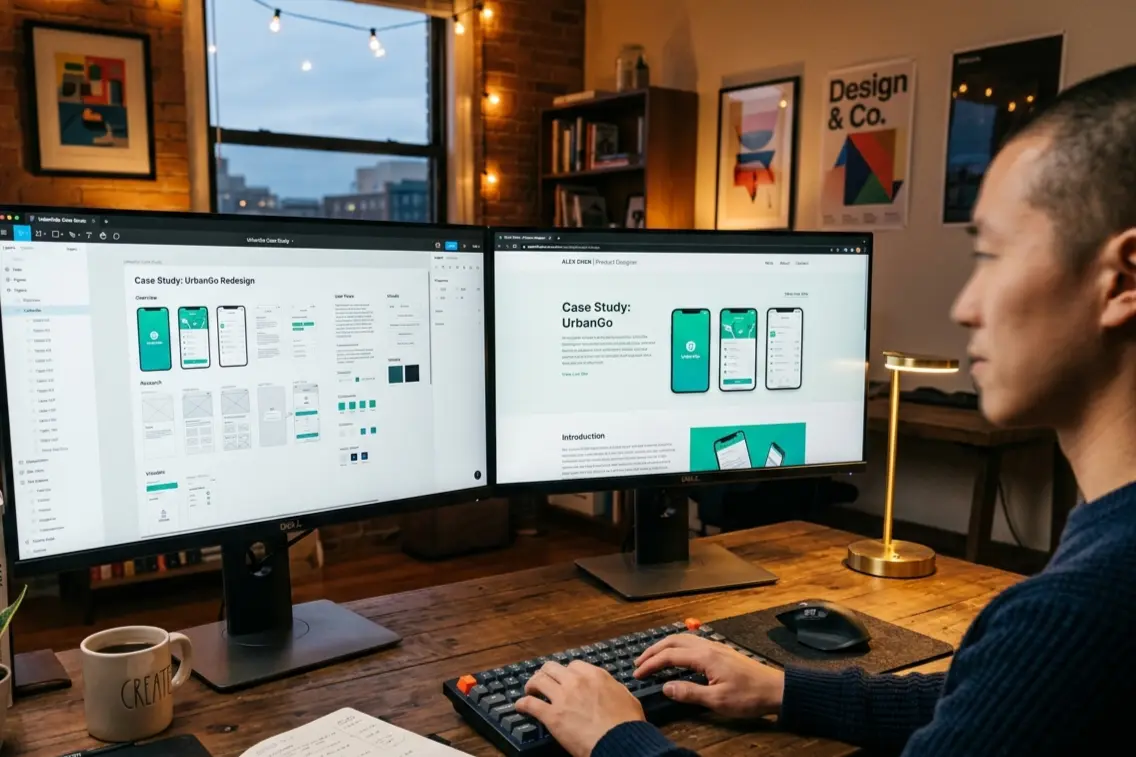
The design industry in India is growing fast and so is the noise around it. Every week, roles at startups, agencies, and D2C brands receive hundreds of applications. Most of them never get a second look. Not because the candidates aren’t talented. Because their UI UX design portfolio doesn’t show hiring managers what they actually came to find.
We’re the team at Resource Geeks Networks, a design and product studio in Bangalore. We review portfolios regularly, from candidates who want to join us and from designers being evaluated for client work. This guide is what we actually say in those review sessions, not a polished version of it.
Understand the full scope of UI UX design before you build your portfolio, so you know what you’re actually showcasing: UI UX Design: The Complete Business Guide 2026
Why Your Portfolio Beats Your Resume Every Time
A resume tells someone what you’ve done. A UI UX design portfolio shows them how you think. Those are different things and hiring managers have about six to eight seconds to form a first impression before deciding whether to keep reading.
According to Lovable’s 2026 research, 90% of hiring managers consider portfolios important when evaluating UX candidates and in many cases it’s reviewed before the resume is even opened.
Your portfolio is not a place to collect screenshots. It is a product. The users of that product are busy, skeptical hiring managers who’ve seen hundreds of nearly identical portfolios this month. Design accordingly.
How Many Projects Should Be in a UX Portfolio
Three to five projects. That’s it. But each one needs to tell a complete story.
We’ve seen portfolios with twelve projects where not one showed us how the designer thinks. We’ve seen portfolios with three that got candidates into interviews at strong companies. The number is not the differentiator. Depth is.
For a beginner, here’s a breakdown that works: one mobile app redesign where you document the problem and every design decision you made, one end-to-end case study from research to final screens, and one project where a real user’s feedback actually changed your design. That last one is what most beginner portfolios don’t have. And it’s the one that stands out.
When candidates ask us this question during our review sessions, what they’re really asking is “Am I enough yet?” The honest answer is: you’re enough when your thinking is visible, not when your project count is high.
How to Write a UX Case Study for Your Portfolio
This is where most portfolios fall apart. Not because designers don’t do the work but because they present the output without documenting the thinking that led there.
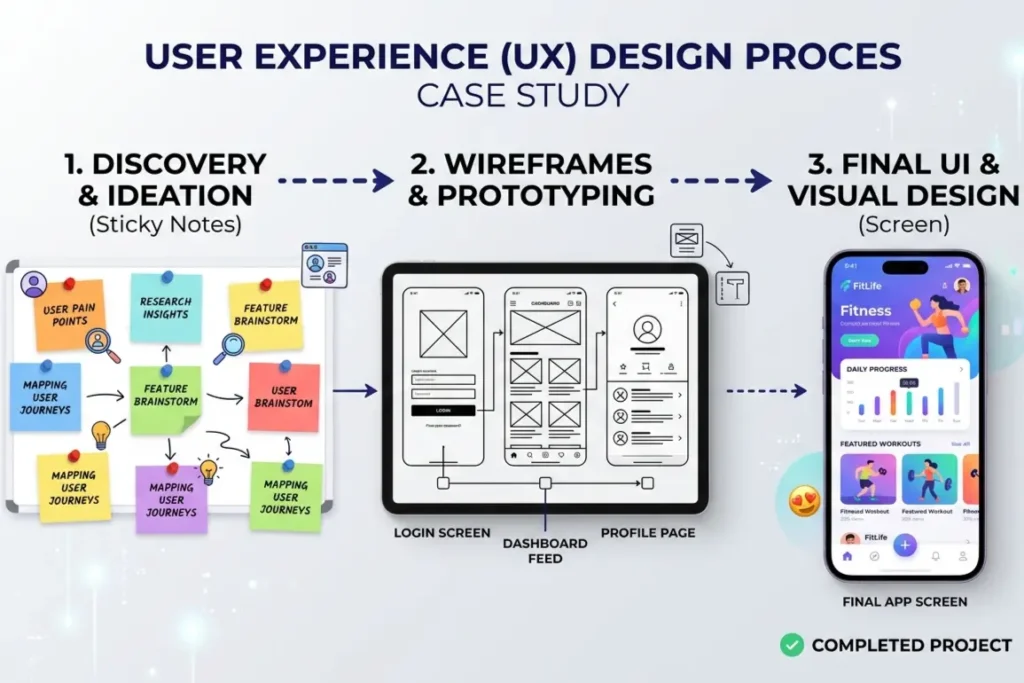
According to Slickplan’s 2026 analysis, the strongest UX portfolios focus on how research insights turned into concrete design choices, with the emphasis on decisions rather than polished final screens.
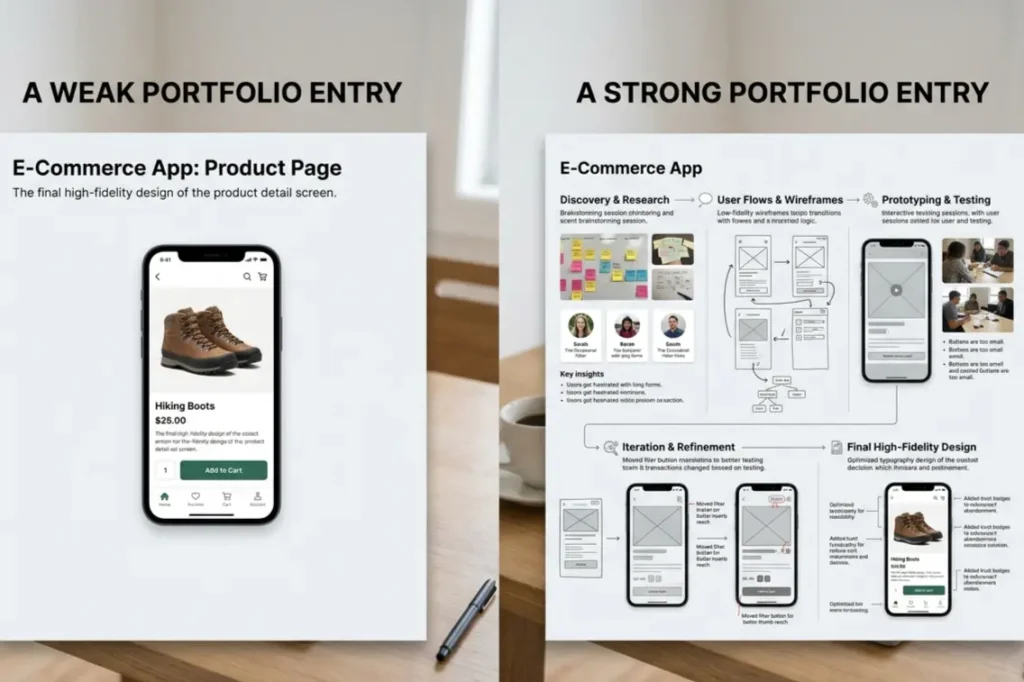
A case study that gets you hired opens with the actual problem, a specific friction point you identified, not “improve the user experience.” It shows the research even if that was five user interviews and a rough competitor review. It includes wireframes that look messy because real process does look messy. It shows where your first solution failed and what changed because of that. And it closes with an outcome, a metric, a behavioral shift, a client result, or at minimum a clear statement of what you learned and what you’d measure next time.
The section most candidates skip is the “what failed” section. That is the most valuable section to include. Hiring managers aren’t looking for designers who get it right the first time. They’re looking for designers who know what to do when they don’t.
Use the right tools to create and document your portfolio projects properly: UI UX Design Tools That Agencies Actually Use in 2026
What Indian Hiring Managers Actually Look For
We can speak to this directly because we are Indian hiring managers. Here is what we’re actually looking for when we open a portfolio.
First, whether you understand the user context. India is not a single market. A D2C brand serving users in Bangalore serves people who behave differently from users in a Tier 2 city. If your case study shows you’ve thought about this even once, you’re ahead of most portfolios we see.
Second, decisions backed by reasoning. Not “I chose this font because it felt modern” but “I chose this font because our testing showed users over 35 found thin typography difficult to read on entry-level Android devices.” That level of specificity is rare and it’s what separates candidates who get callbacks from candidates who don’t.
Third, ownership clarity. Group projects are fine. But we need to know exactly what you did, which flows you designed, which research you ran, which calls you made. “I was part of a team that redesigned the checkout” tells us nothing. “I ran the usability testing, identified three drop-off points, and redesigned the payment screen based on those findings” tells us everything.

UXfolio’s survey of 74 UX recruiters found a consistent message: reviewers want one project explained really well rather than five explained quickly, with depth of thinking, honesty about the process, and evidence of growth mattering far more than polish.
The AI Screening Problem Nobody Warns You About
This is the gap almost no portfolio guide for Indian designers addresses and it’s becoming one of the more important things to understand before you publish.
According to Muzli’s 2026 hiring research, 78% of recruiters now use AI-assisted tools to screen portfolios before a human ever opens them, meaning your case study structure, headings, and written content are being parsed by algorithms that prioritise clarity and proof of impact over visual aesthetics.
What this means in practice is that your case study titles matter more than your hero images for clearing the first filter. Use specific, descriptive language in headings. “Redesigned onboarding flow for a D2C brand, reducing drop-off by 34%” reads better to both a screening algorithm and a human reviewer than “Project 2: App Redesign.” Your portfolio website’s page title and meta description also matter. If you’re building a custom site, make sure your name and role appear clearly in the page title.
Best Platforms to Host Your UI UX Portfolio in India
Platform matters less than content quality. But it still shapes the impression you make.
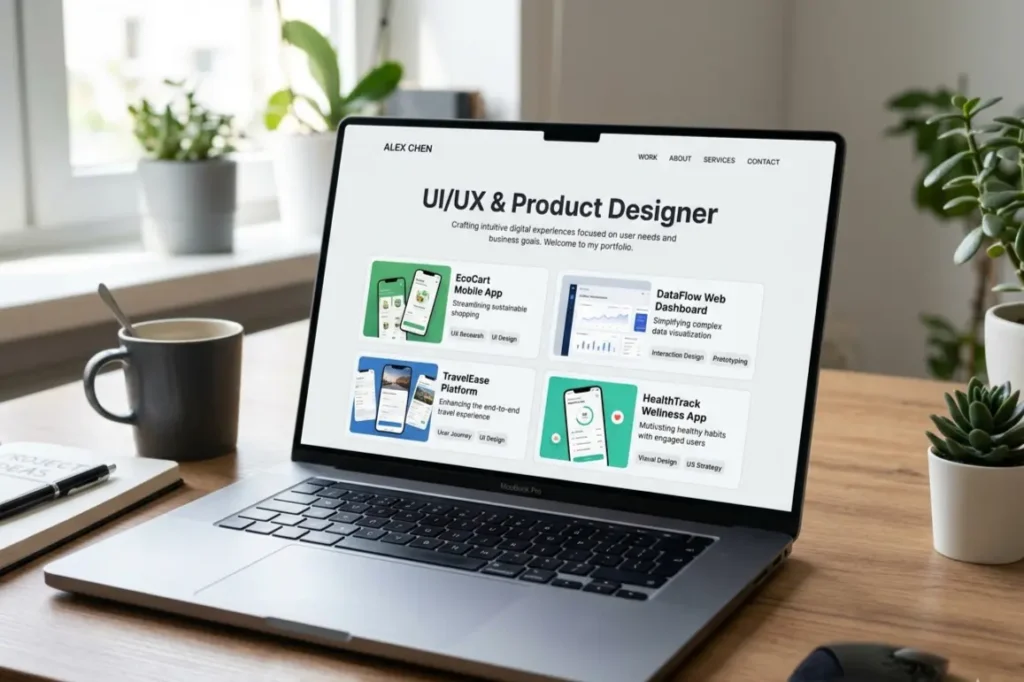
A custom-built portfolio site on Framer or Webflow shows initiative and real investment in your craft. At Resource Geeks Networks, when a candidate has built their own portfolio site, it signals product thinking because building your own portfolio is itself a UX project. In India, having someone build this for you typically starts around Rs. 8,000 to Rs. 25,000. Building it yourself on Framer’s free tier costs nothing.
Behance is widely recognised and adds discoverability. The limitation is that it can feel templated and gives you little control over how case studies flow. Better than nothing, not better than a custom site.
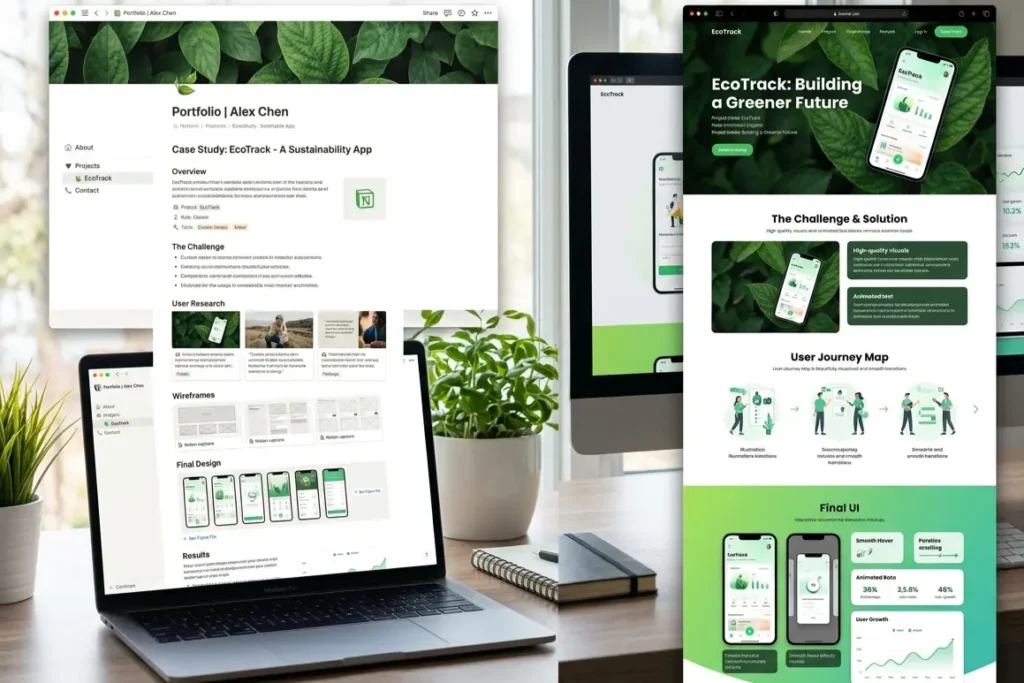
Notion is surprisingly effective for early-career designers. Fast to set up, easy to update, and clean enough to work. It can be read as informal to agencies with higher hiring standards. Start here if you need to move quickly, then migrate.
Portfolio Mistakes That Get You Rejected
These are the mistakes that end reviews early at Resource Geeks Networks. They come up in nearly every batch we review.
Showing only final screens. Screens without context are decoration, not evidence. If we cannot see your process we cannot evaluate your thinking. We’re left evaluating your visual taste and that is a much lower bar than what actually gets people hired.
Treating a copied design as original work. Practising by rebuilding existing interfaces is fine. Publishing one as a portfolio project with no research, no problem framing, and no design reasoning is a red flag. It tells us you can replicate, not create.
No outcome or impact statement. What happened after the work was presented or shipped? If none of that is available, explain what you expected to improve and how you’d measure it. The absence of this section reads as low awareness, not bad luck.
No mobile optimisation on the portfolio itself. Many hiring managers review portfolios on their phones during commutes, and a portfolio that breaks on mobile is making a bad first impression at the exact moment it needs to make a good one.
How to Present Your Portfolio in an Interview
Getting your portfolio in front of a hiring manager is half the job. The walkthrough is the other half.
Most candidates open their portfolio in an interview and start narrating what’s on the screen. That is a mistake. The interviewer can already see the screen. What they cannot see is your thinking and that is what they’re there to understand.
A walkthrough that works sounds like this. Start with the business or user problem, not the design. Explain why the problem mattered. Walk through two or three key decisions and specifically why you rejected the alternatives you considered. Show where the design changed because of research or feedback. Close with the outcome or what you would do differently now.
Keep the walkthrough to eight to twelve minutes per project unless asked to go deeper. More than that and you’re losing the room. Brevity with confidence signals seniority and it’s something that genuinely impresses us every time we see it.
Pair your portfolio with the right career strategy to get into the right rooms in the first place: The UI UX Designer Career Nobody Talks About Honestly
FAQs About UI UX Design Portfolio
How to build a UI UX design portfolio with no experience?
Start with apps you actually use and find genuinely frustrating. Pick one specific flow and redesign it. But do the research first. Talk to two or three people who use the same app and find out what bothers them. Build your redesign around those real findings. That is a legitimate case study. It doesn’t matter that it was self-initiated. What matters is that it documents real thinking about a real problem. Do three of those and you have a beginner portfolio that can get you interviews.
What to include in a UI UX design portfolio?
Every project should include the original problem, your research process however rough it was, wireframes or early iterations, final screens, and the reasoning behind key design decisions. If you have outcome data include it. If not, explain what you would measure and why. Your about section should clearly state what kind of designer you are and what you’re looking for. Contact information needs to be easy to find. One of the most common portfolio mistakes is making it hard for an interested recruiter to get in touch.
What are the best platforms to host a UI UX portfolio?
A custom site on Framer or Webflow gives you the most control and makes the strongest impression. Notion works for beginners who need to move fast. Behance adds discoverability but limits flexibility. The platform matters less than the quality of your case studies. A thoughtful Notion portfolio will outperform a visually impressive custom site with weak case studies every single time.
How many projects should be in a UX portfolio?
Three to five well-documented case studies is the standard most experienced hiring managers recommend. More than five dilutes attention. Fewer than three can feel thin unless each project is exceptionally well explained. The number is far less important than whether each project shows a complete process from problem through to outcome.
How do I write a UX case study for my portfolio?
Open with the problem in one or two sentences. Show your research with visuals even if it’s just photos of sticky notes. Walk through wireframes and explain the reasoning behind structural decisions. Show where the design changed and why. Close with the outcome or what you learned. The most important thing is making your decision-making visible at every stage, not just presenting the final result.
Get Your Portfolio Reviewed by People Who Actually Hire
Most designers spend months building a portfolio and then send it into the void hoping something lands. There is a better way.
At Resource Geeks Networks, we work with designers at every stage, reviewing portfolios with specific actionable feedback, mentoring early-career designers on case study structure, and placing strong candidates on real client projects. If you’re building your UI UX design portfolio and want expert eyes on it before you start applying, we’d genuinely like to see what you’ve made.
Visit resourcegeeksnetworks.com and let us look at it together.